Art Style
Manga (Black & White) Comic Style
Ink, screentone, and the look of a printed manga volume
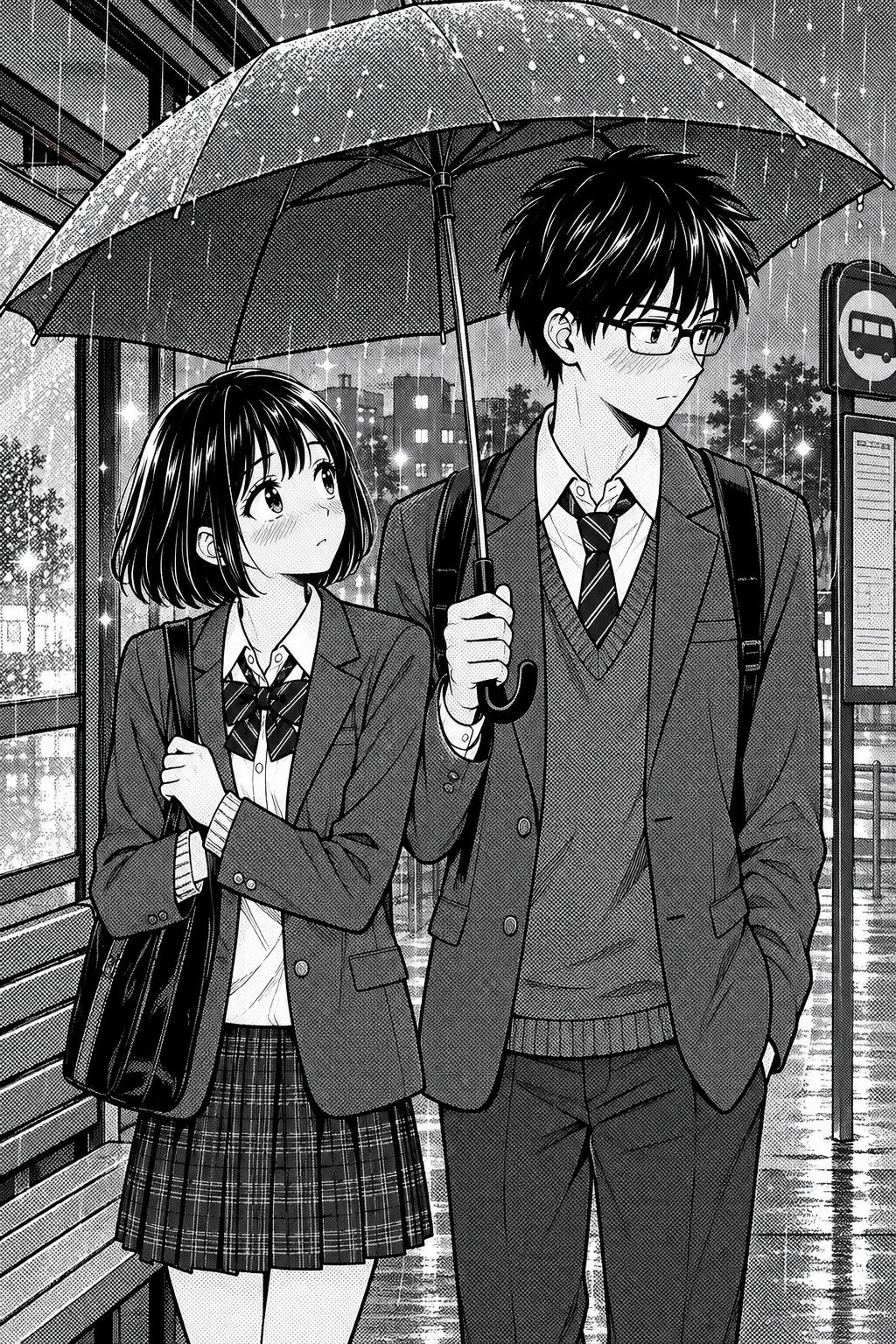
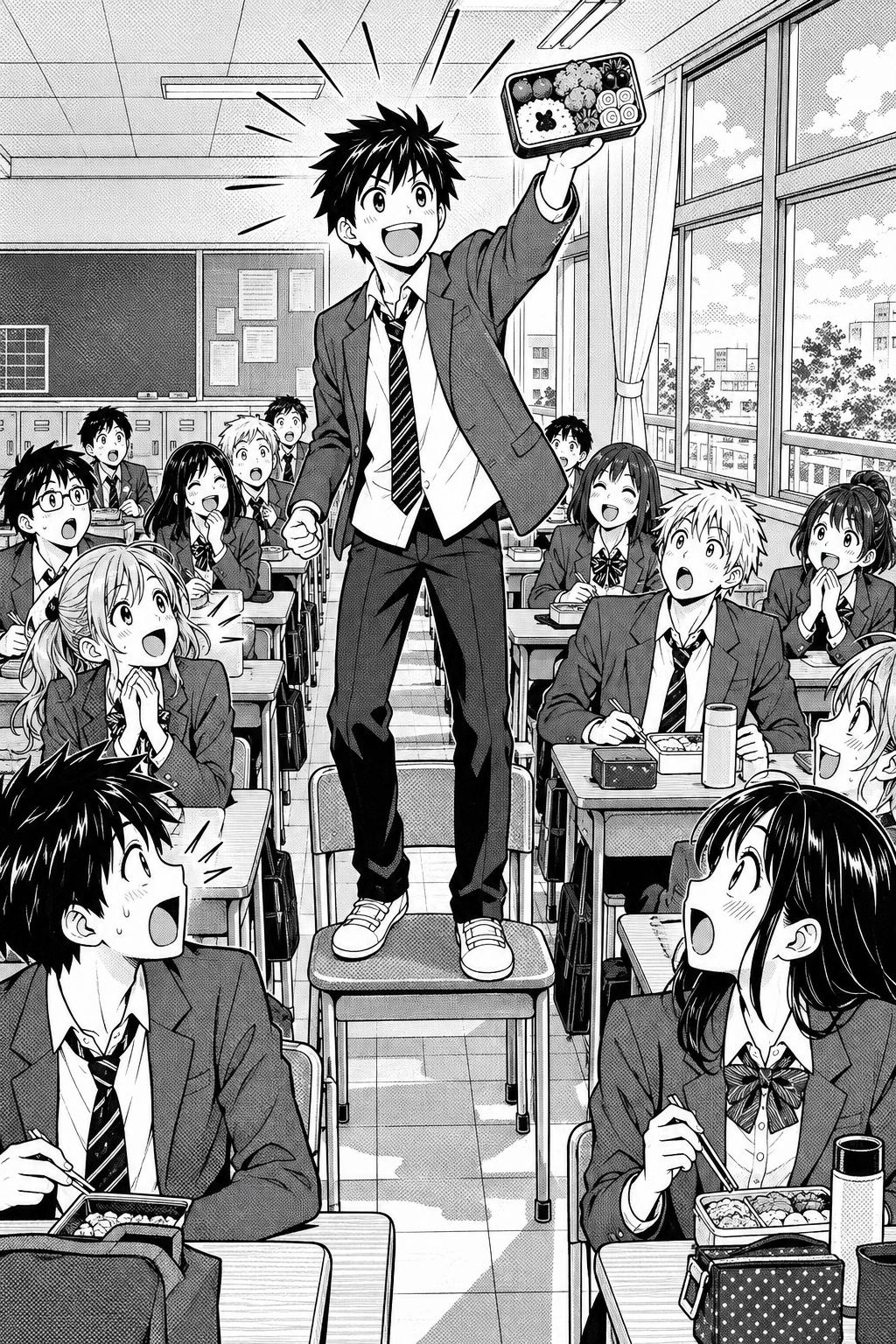
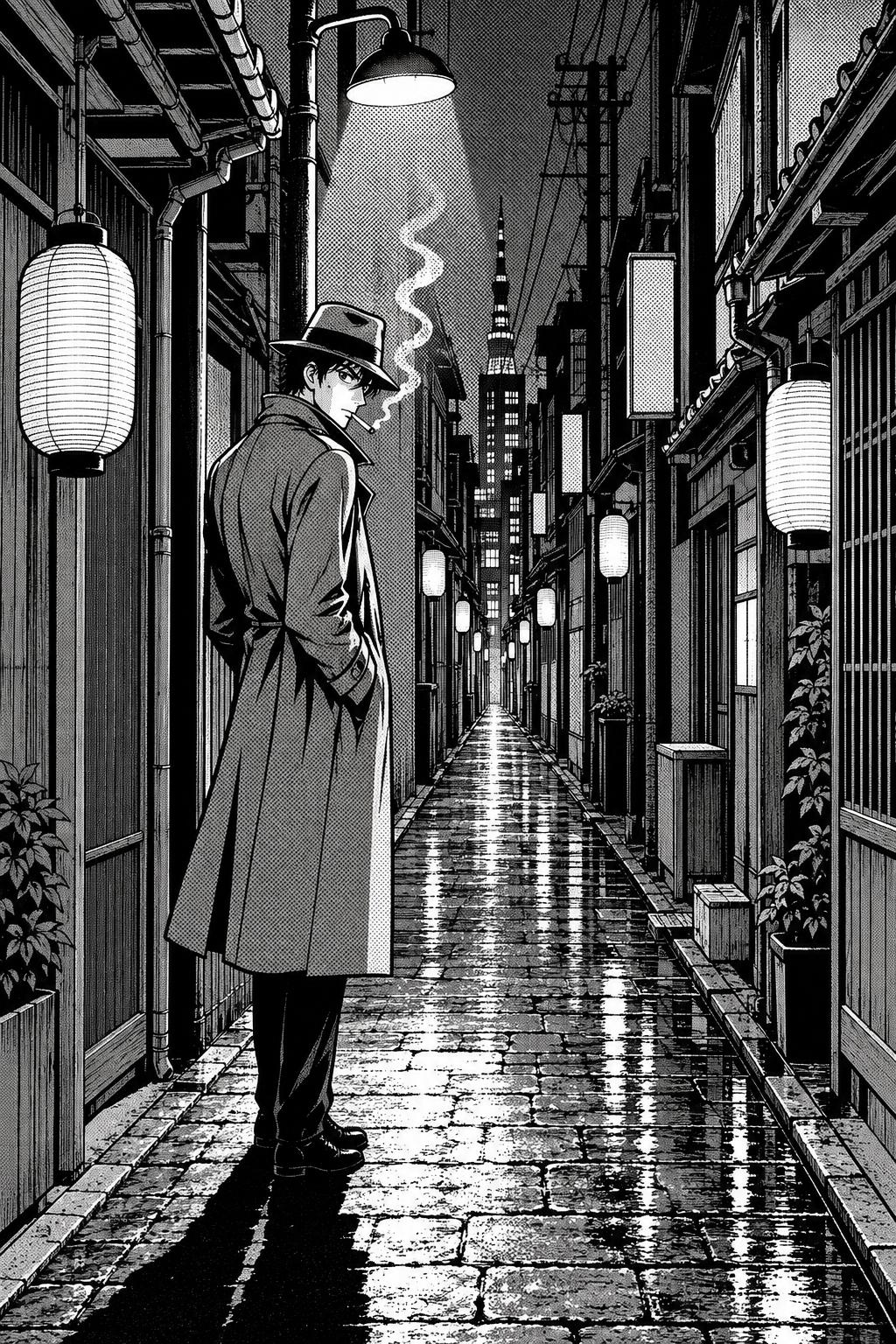
Black-and-white manga is how most manga is actually read. Open any volume from a Japanese bookshop and you get crisp black ink on white paper, mid-tones built from dot screentone, and speed lines that make a single panel feel like it is moving. This style gives your story exactly that look: a printed manga page rather than a colour anime still, with your characters staying the same from the first panel of the chapter to the last.
Why manga is printed in black and white
Manga grew up in weekly anthology magazines like Weekly Shōnen Jump, printed on cheap paper in huge runs, with each chapter drawn against a deadline of days, not weeks. Colour was too slow and too expensive, so artists made black and white do everything. Ink carried the line work, solid black carried the drama, and screentone (adhesive sheets of printed dots, cut out with a knife and burnished onto the page) carried the shading. Screentone became so central to the look that digital artists still recreate it today. A colour anime still and a manga page are two different things: the first is built on flat colour, the second on contrast and texture.
Screentone, speed lines, and bare white paper
This style draws with a fine pen line that thins at the end of each stroke, heavier around figures and finer on faces and hair. Shadows are solid black or a darker dot tone with a hard edge, never a soft grey wash. Dark hair is solid black with white highlight streaks; eye highlights are left as bare paper. Backgrounds are inked in proper perspective and toned with screentone, and action scenes get radiating speed lines and focus lines that pull the eye to the moment that matters. There is no colour anywhere in the image, which keeps every page readable at a glance.
Manga (Black & White) vs Manga / Anime
YarnSaga has two manga styles. Manga / Anime is the colour version: flat cel colour, the look of an anime screenshot or a colour webcomic. Manga (Black & White) is the printed-page version: ink and screentone, no colour at all. Choose black and white when you want your story to read like a real manga chapter, for shōnen action, school life, sports, romance, mystery, or horror, and when the drama comes from light, shadow, and expression rather than from colour. Choose Manga / Anime when colour carries the mood, or when the story will mostly be read as single images on social media.
Create a story in this style →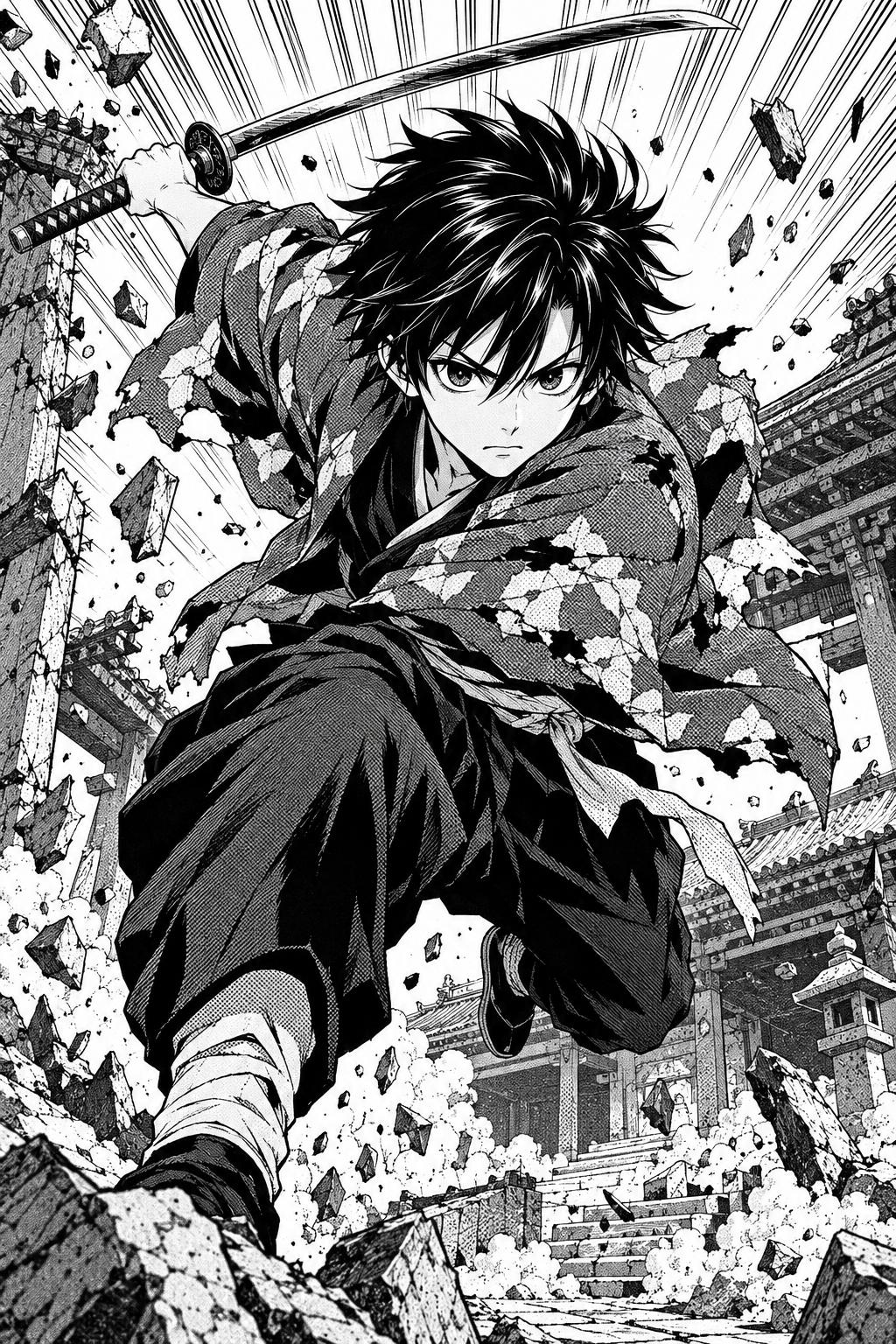
Style Characteristics
Origin
Postwar Japanese magazines
Best for
Shōnen, School life, Drama
Mood
Dynamic, Expressive
Complexity
High
Ready?
Start your story
in Manga (Black & White).
YarnSaga generates consistent, publication-ready panels in this style — across every character, every scene, every page. Credit packs from $6.