Blog
Stories about
storytelling.
Guides, tips, and insights on AI comic creation, character design, and visual storytelling.

News & Updates
Your Whole Story as One PDF — and One Engine Behind Every Style
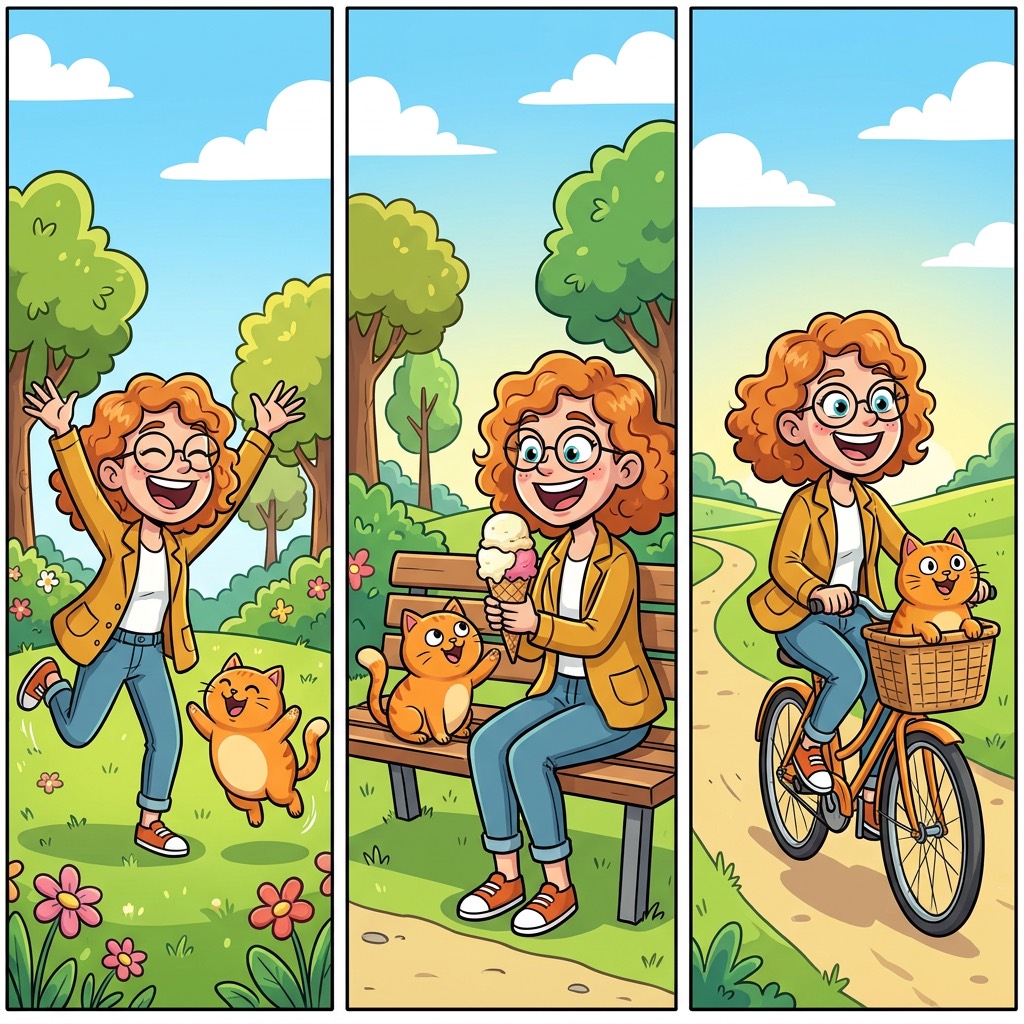
Export used to stop at one page at a time, which left you stapling a forty-page graphic novel together yourself. Now the whole story comes down as a single PDF — cover first, every page in order, free. And every art style now draws on the same image engine, so the book you download holds one look from the first panel to the last.
News & Updates
Panels That Hold Together: A Consistency Update
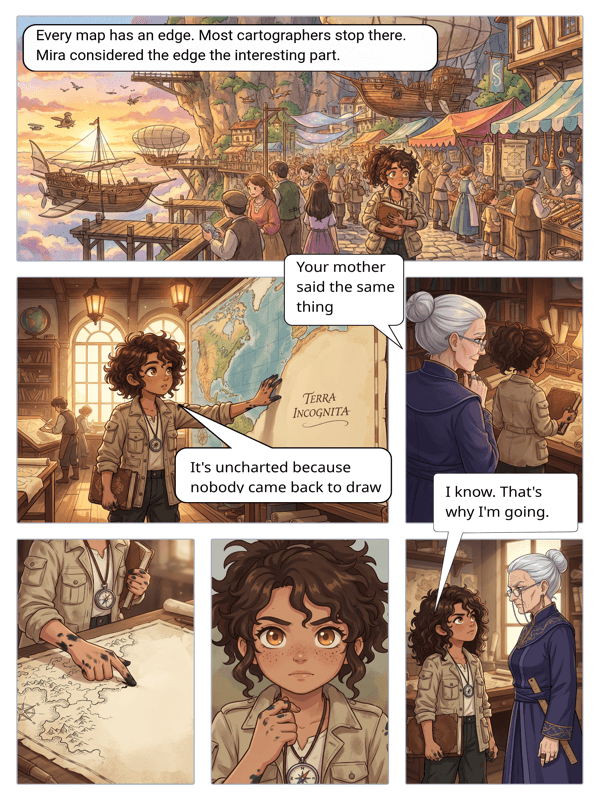
A comic is one world seen from different angles, and the moment the panels stop agreeing with each other the story stops working. This update is a straight push on that: your cast holds, the objects you define keep their own identity, and the quiet panels with nobody in frame now sit in the same visual world as the rest of the book. Already live for every story.
Tool Reviews
Free AI Comic Tools: What You Actually Get, and Where They Stop
Free AI comic generators are genuinely good at some jobs and structurally incapable of others. The wall is always the same one: every panel is generated independently, so your character is a different person each time. Here is what free tools do well, exactly where they break, and how to tell which side of the line your project is on.

News & Updates
YarnSaga Is Now on Mobile — Make and Share Comics From Your Phone
YarnSaga now works on your phone — a made-for-mobile flow built around one loop: make a one-page comic and share it, without touching a computer. Here is how Quick Story, on-phone editing, and one-tap share work on mobile, the three ways to start, and where the phone hands off to the desktop canvas.
News & Updates
Introducing Quick Story: A One-Page Comic, Built to Share
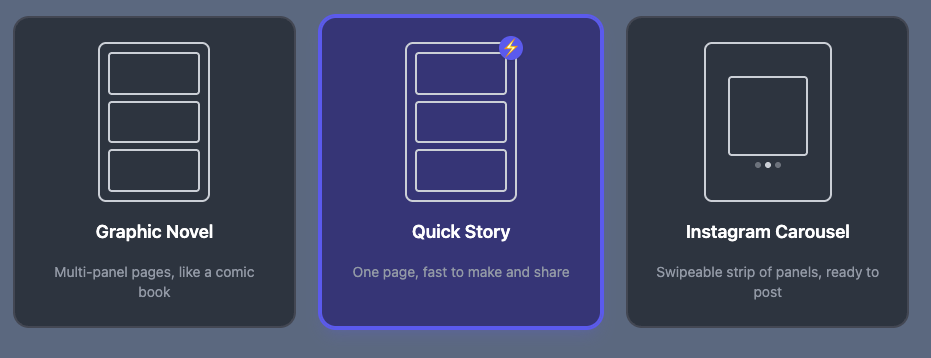
Not every story needs to be a full graphic novel. Quick Story is our new one-page format made for speed and sharing: a single page, no cover or props to set up, up to three characters, and a one-tap Share that hands you a ready-to-post image plus a link. Here is what it is, when to reach for it, and how it differs from a full Story.
News & Updates
Introducing the 3D Animated Movie Style — Pixar-Style Comics, No Studio Required
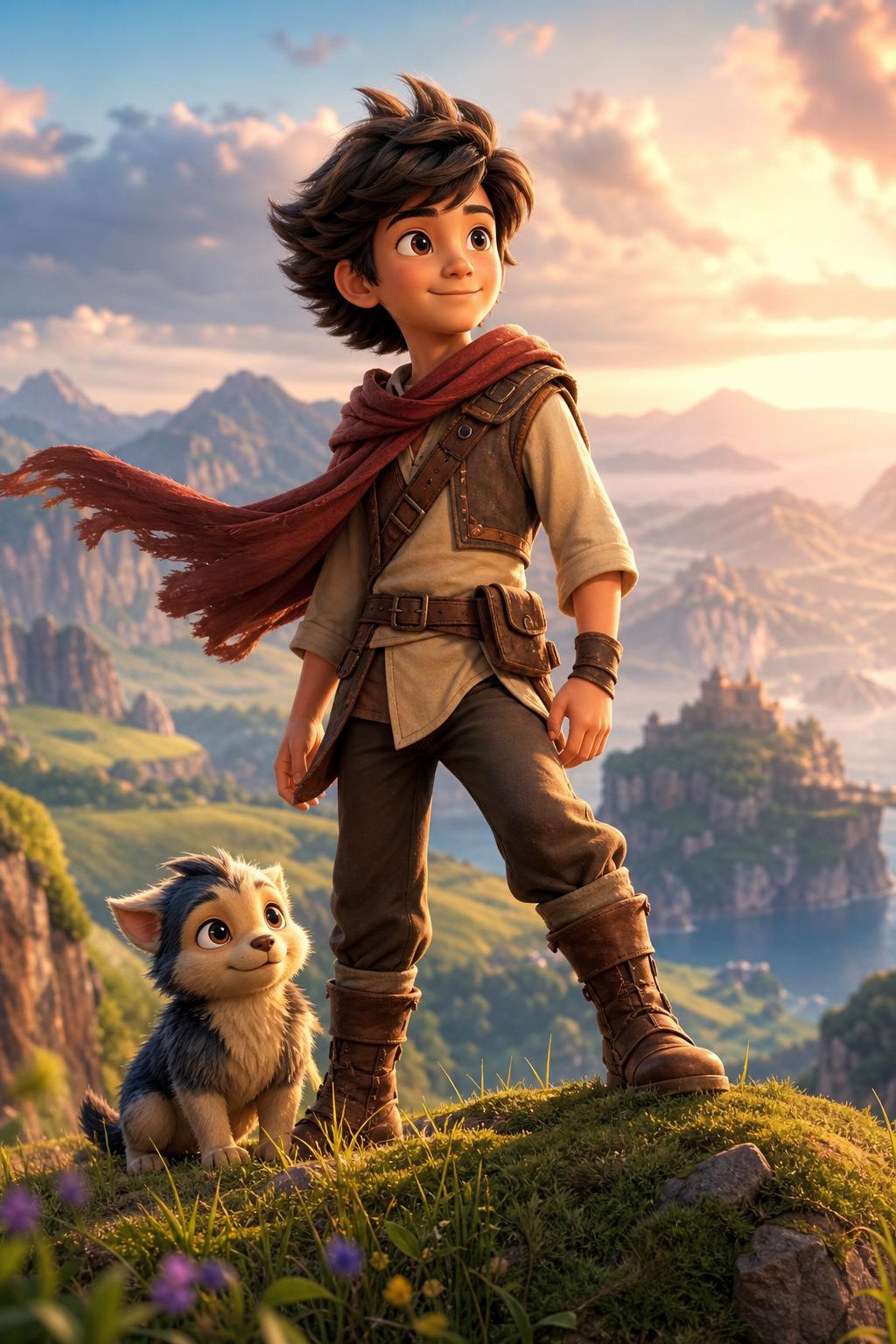
Our newest art style brings the glossy, heart-warming look of modern CGI features — think Pixar and DreamWorks — straight into your comics. Fully rendered 3D characters, soft cinematic lighting, and worlds you want to step into, with the same consistent characters across every panel. Here is what it is, what it is great for, and how to use it.
News & Updates
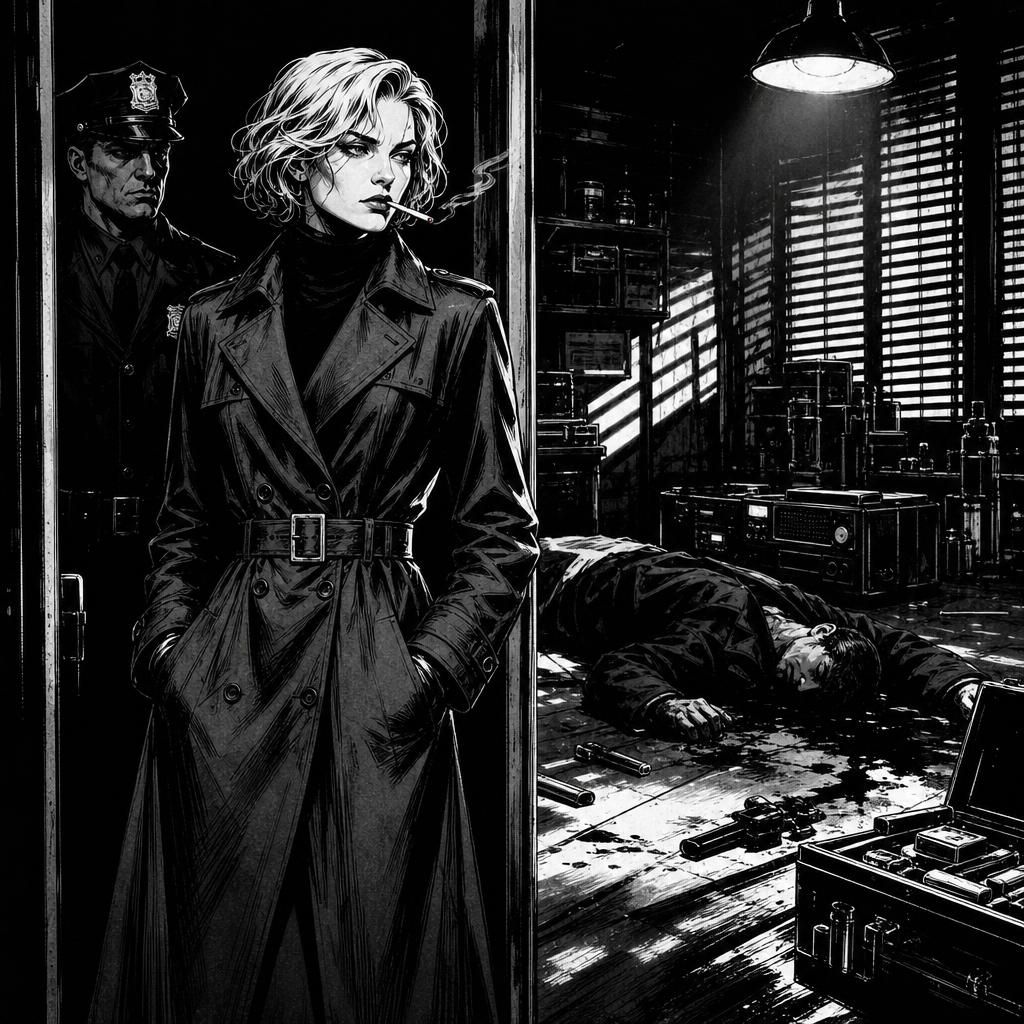
Sharper Styles, More Consistent Characters — and a Cheaper Noir
We upgraded how every art style is generated: sharper linework, richer detail, and characters that hold their look from panel to panel. Plus, the Noir / Sin City style now runs on a new image engine — same razor-sharp black-and-white drama, fewer credits per panel.
Character Consistency
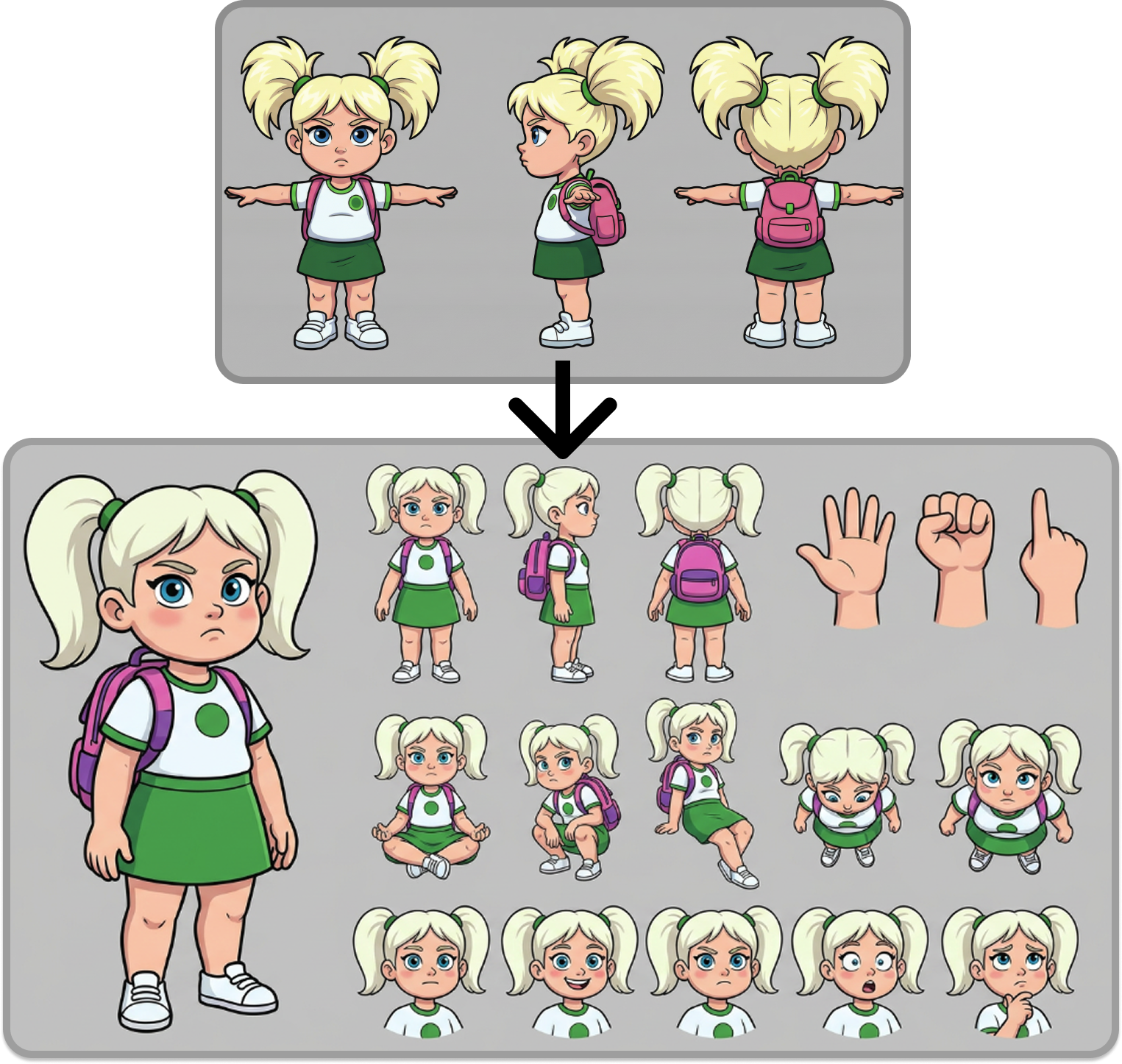
Richer Character Sheets: How Studio-Style Model Sheets Keep Your AI Characters Consistent
Every character in YarnSaga is now generated as a full studio-style model sheet — a hero pose, a front/side/back turnaround, action poses, an expression study, and a dedicated hands close-up. More reference for the AI means characters that hold their face, build, and proportions across panels, with far fewer broken hands.
Tool Reviews
The Best AI Comic Factory Alternatives in 2026
AI Comic Factory is great for a quick free strip — but it can't keep characters consistent or build a real story. Here are the best AI Comic Factory alternatives in 2026, ranked by what you're actually trying to do, from consistent multi-page comics to raw image quality.
News & Updates
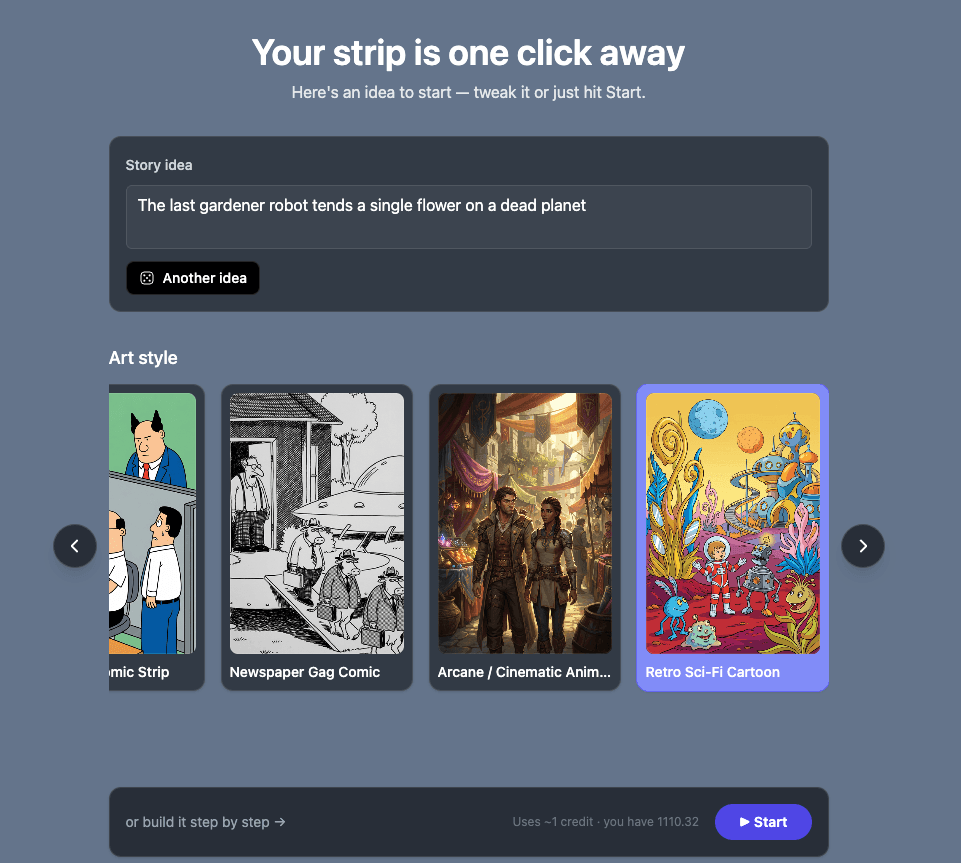
Introducing Quick Start: One Prompt, One Click, a Finished Comic Strip
The blank page is where most comics die. Quick Start kills it: type one sentence (or use the idea already waiting for you), pick an art style, hit Start — and about a minute later you have a finished three-panel strip with consistent characters, open in the full editor. Here is how it works and who it is for.
News & Updates
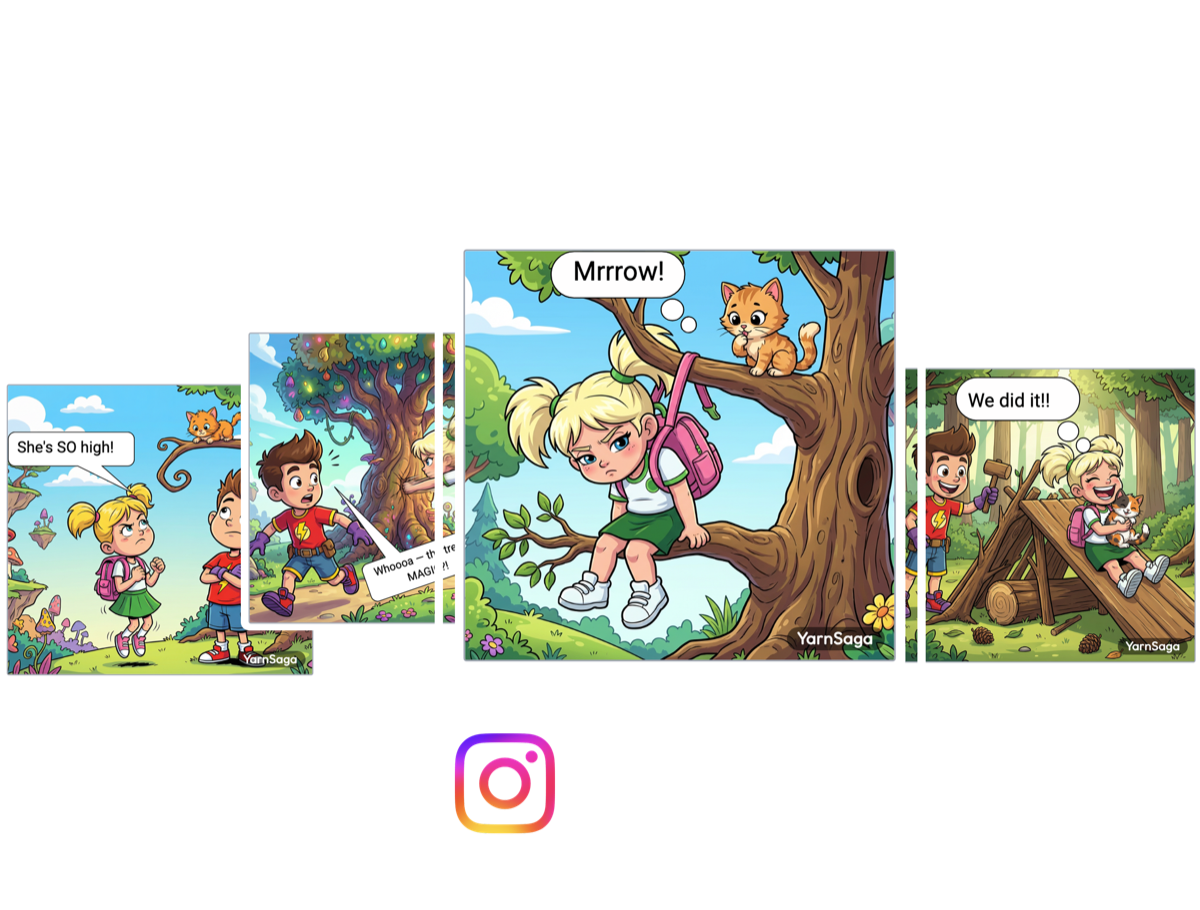
How to Turn Your Comic into an Instagram Carousel (with AI)
Build a multi-panel comic strip with consistent characters and export it as a ready-to-post Instagram carousel — square 1:1 or portrait 4:5, sized natively with no cropping, downloaded as a numbered ZIP you upload in order. Here is the full step-by-step, plus sizing and pacing tips.
News & Updates
YarnSaga Payments Are Now Powered by Stripe
Checkout on YarnSaga is now powered by Stripe — the payment system behind millions of businesses worldwide. That means a faster, familiar checkout with Apple Pay and Google Pay, bank-grade security where your card details never touch our servers, and the same pay-as-you-go credit packs (no subscriptions, credits are valid for six months).
Character Consistency
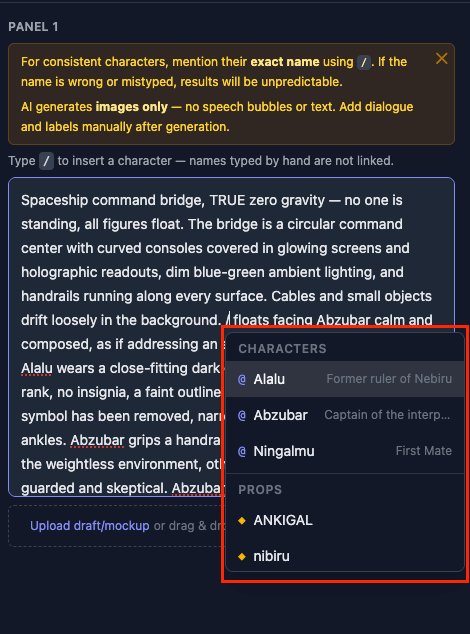
How to Keep Your AI Comic Characters Consistent Across Every Panel
Character drift is the #1 frustration in AI comics. Here are the concrete steps that keep your characters consistent panel to panel — including a new feature that locks every character to their reference and cleans conflicting scene text for you automatically.
Comics History
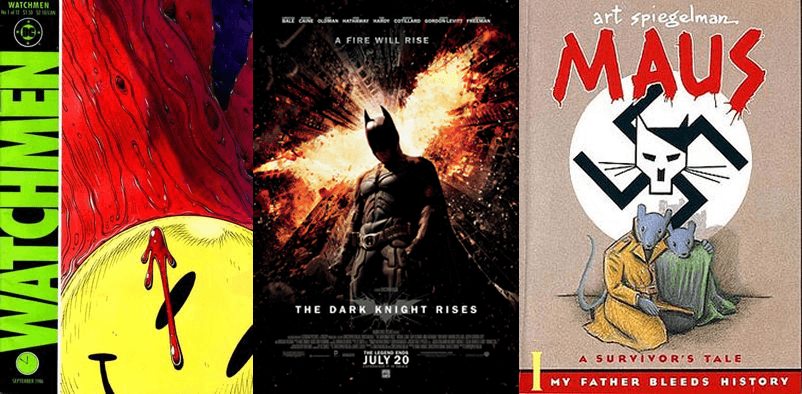
1986: The Year Comics Became Literature — Watchmen, The Dark Knight Returns, and Maus
In eighteen months, three books pulled comics off the spinner rack and onto the literature shelf. Watchmen, The Dark Knight Returns, and Maus — how 1986 turned a kids' medium into a Pulitzer-winning art form.
News & Updates
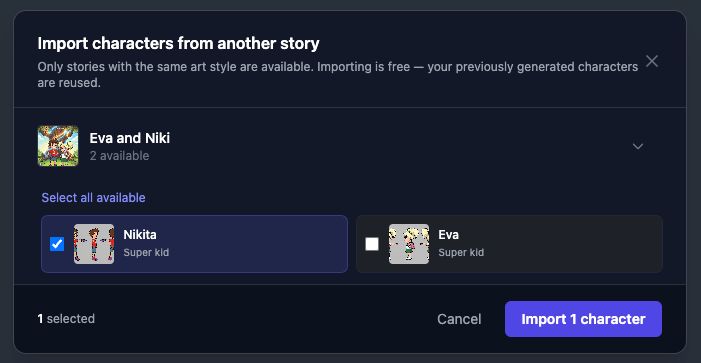
Reuse Your Characters Across Stories — Free, Instant, Identical
You can now import any character or prop from one YarnSaga story directly into another — for free. No credits charged, no AI re-generation, no visual drift. The same character sheet image is reused, so your protagonist looks pixel-identical from Episode 1 to Episode 100.
News & Updates
YarnSaga Updates: Landscape Pages, Auto Quality Check, and Background Exports
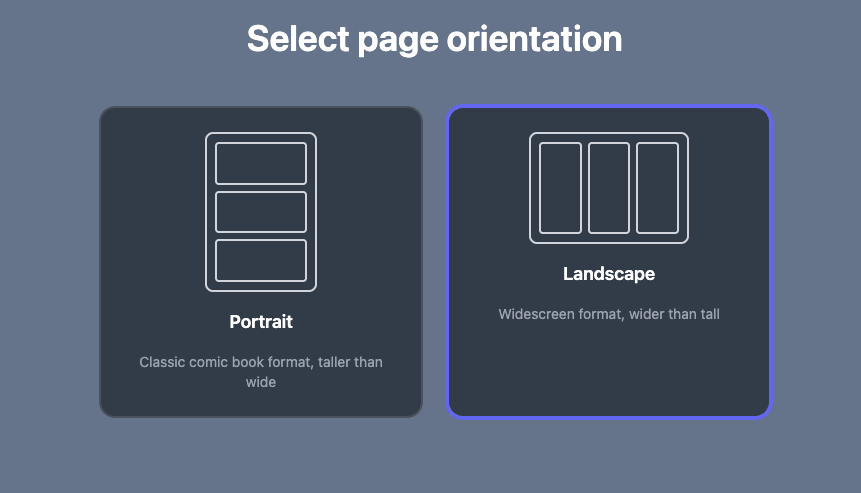
This week's release: landscape page format, automatic AI quality check that re-generates bad panels for free, multi-character consistency upgrades, and a rebuilt background export pipeline that's 3x faster. Here's everything that shipped.
Guides
Sketch Your Panel First — Then Let AI Generate It
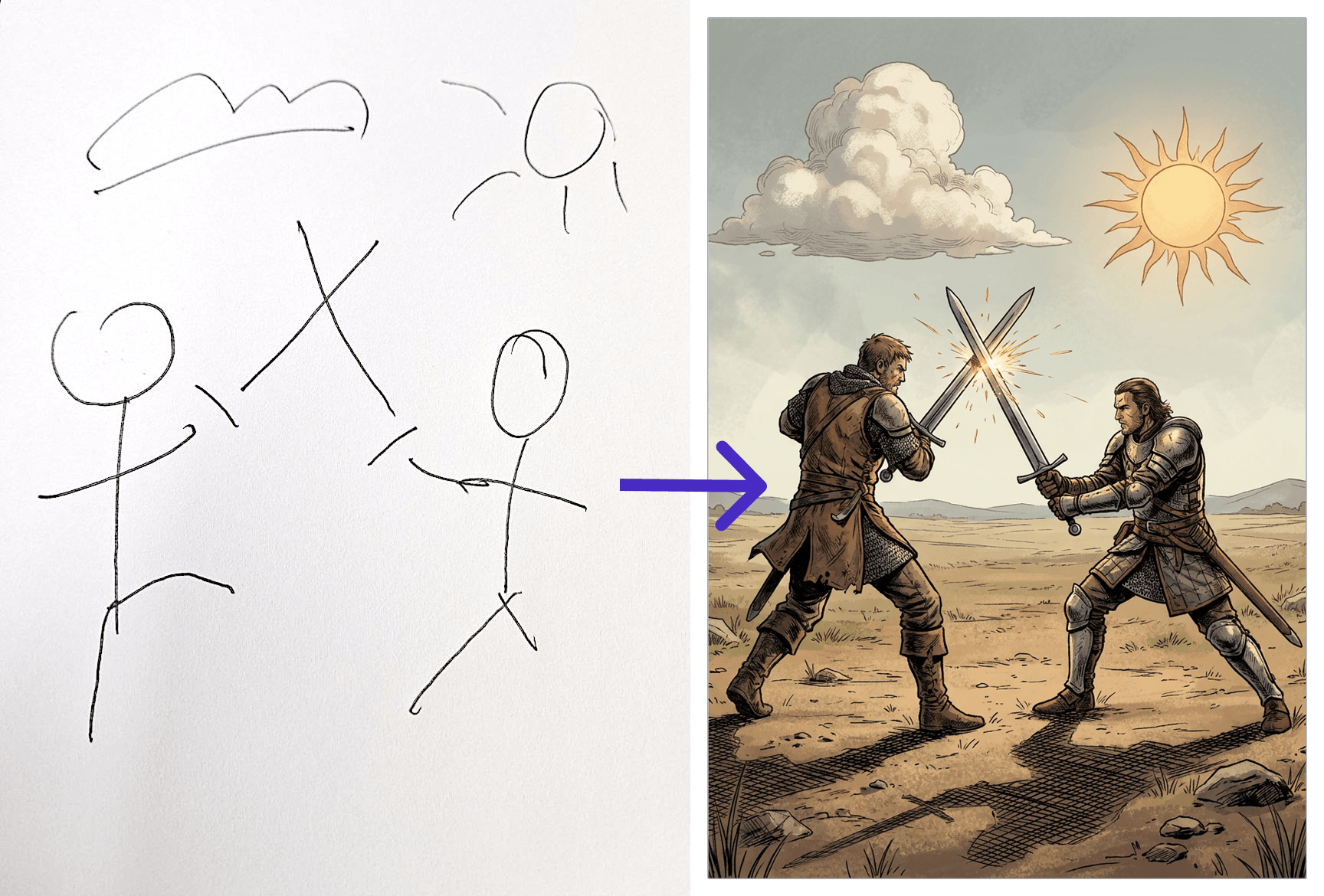
Blind prompting loses control of composition. Sketch the layout on paper first — stick figures, rough shapes — upload it, and AI generates the finished panel exactly where you intended. No drawing skills required.
Comics History
Stan Lee's Real Genius Wasn't the Powers. It Was Giving Spider-Man a Landlord Problem.
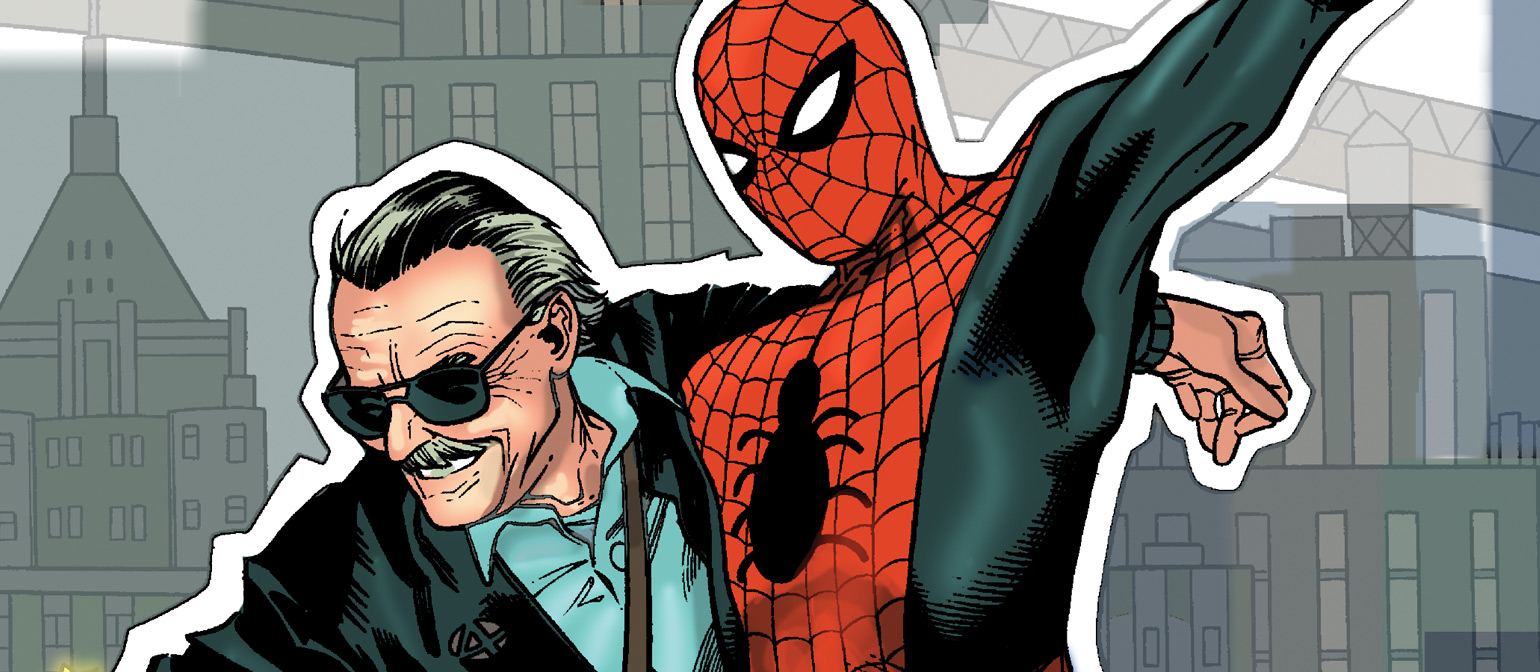
While other creators gave heroes god-like abilities, Stan Lee gave Spider-Man a landlord problem. Peter Parker saved the city and still couldn't make rent. That simple choice — extraordinary powers, ordinary struggles — is why Marvel changed comics forever.
Guides
How to Add Speech Bubbles to a Comic: Types, Placement, and Lettering
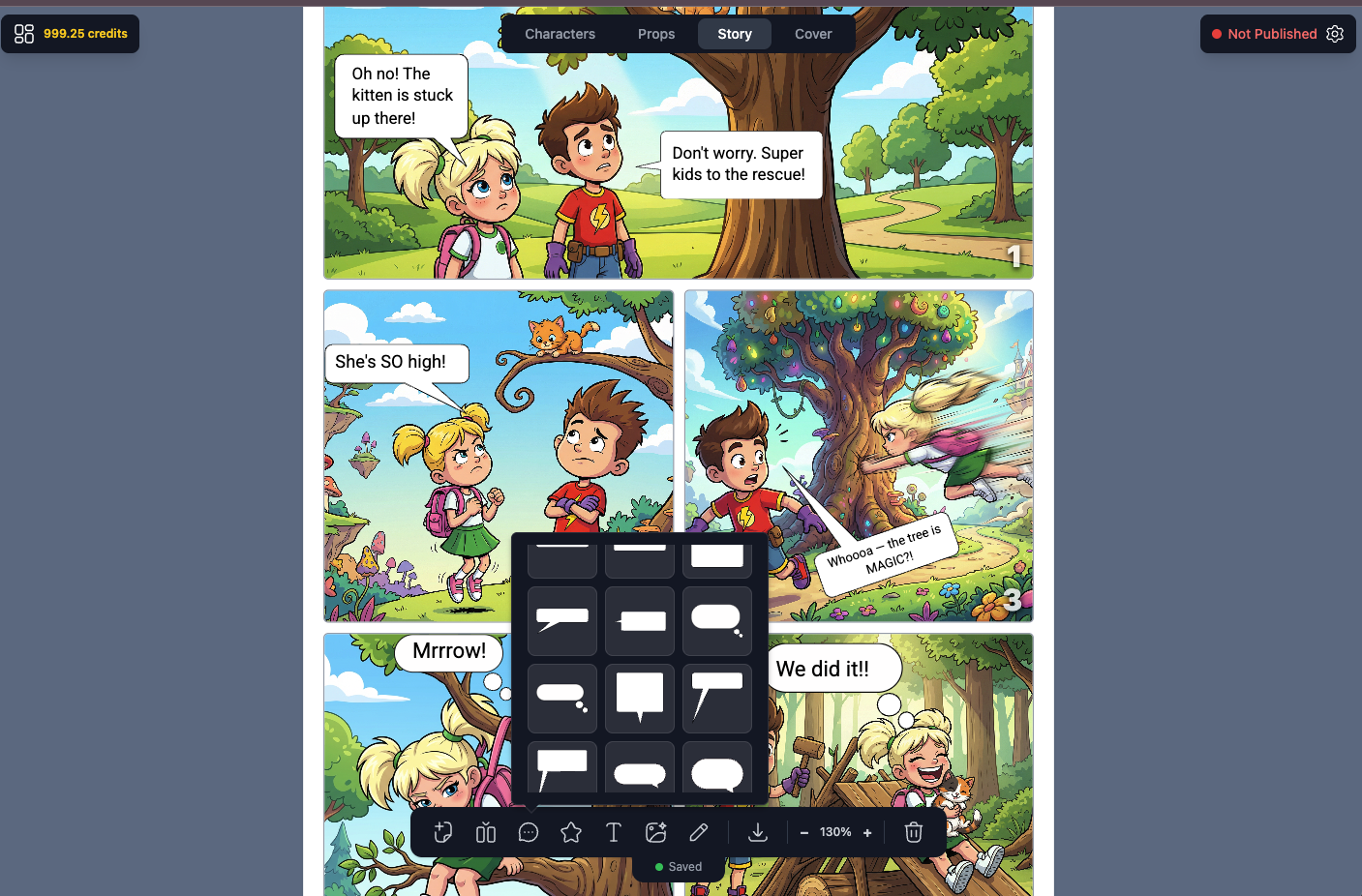
Speech bubbles are what separate illustrated panels from an actual comic. Round, cloud, jagged, whisper — each bubble type carries a different communicative signal. Here is everything you need to know about types, placement, typography, and the tail.
Guides
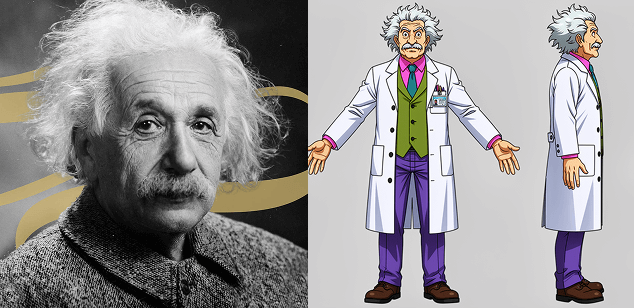
Photo to Comic: How to Turn Your Photo into a Comic Book Character
Turning a photo into a cartoon is easy. Keeping that character consistent across 50 panels of a real comic story is hard. Here is how the photo-to-comic pipeline actually works and what makes character consistency possible at scale.
Guides
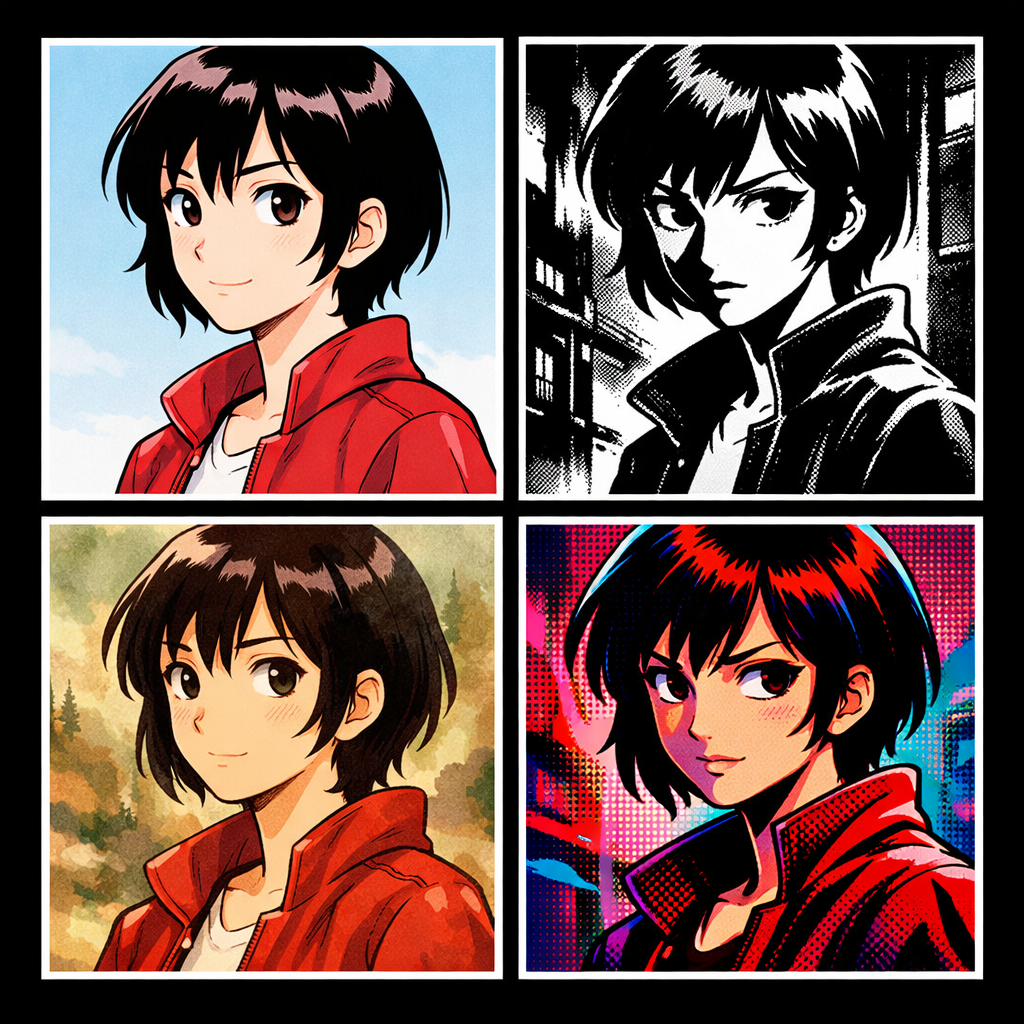
How to Use an AI Graphic Novel Generator — And What to Actually Look For
Most AI tools fall apart when you try to make a 200-page graphic novel. Character consistency, panel layout, dialogue, and publishing export are all different problems from single-image generation. Here is how to evaluate and use a real AI graphic novel generator.
Tool Reviews
AI Comic Generator vs Canva: Which Is Actually Better for Making Comics?
Canva added an AI comic generator — but can it keep your characters consistent across a real multi-panel story? An honest look at what Canva's AI can and can't do, plus the purpose-built alternative for telling an actual comic story, not just generating one image.

Art Styles
Chibi vs Kawaii: What's the Difference in Art Style?
Chibi and kawaii are not the same thing — but they're often used interchangeably. Understanding the real difference will change how you think about character design, comic art styles, and why certain panels make readers immediately smile.
Tool Reviews
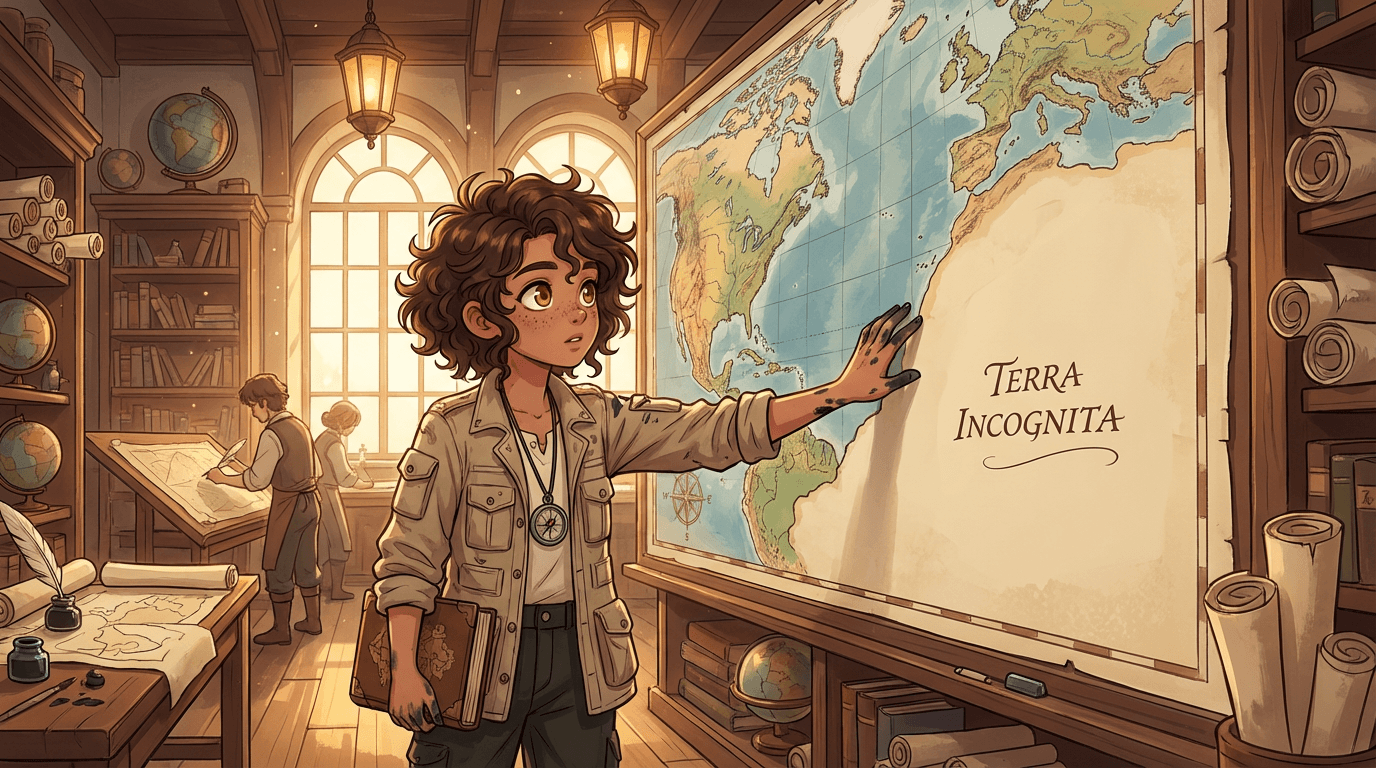
The Best AI D&D Character Portrait Generators in 2026 (Tested and Ranked)
You know exactly what your character looks like. Getting that image out of your head and onto the table is the hard part. We tested the best AI portrait generators for D&D and TTRPG characters — ranked by consistency, quality, and ease of use.
Guides
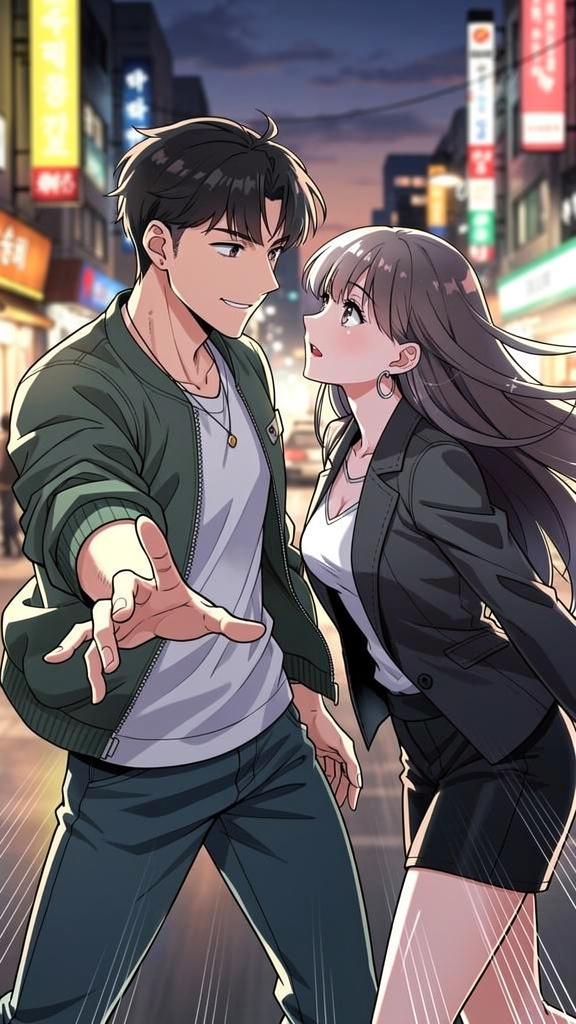
How to Make a Webtoon in 2026 (Step-by-Step, No Drawing Required)
Webtoons have taken over — vertical scroll, episode-based, published free online. Here's the full step-by-step process for making a webtoon in 2026 without drawing a single panel by hand: story structure, character sheets, panel generation, dialogue, and publishing.
Guides
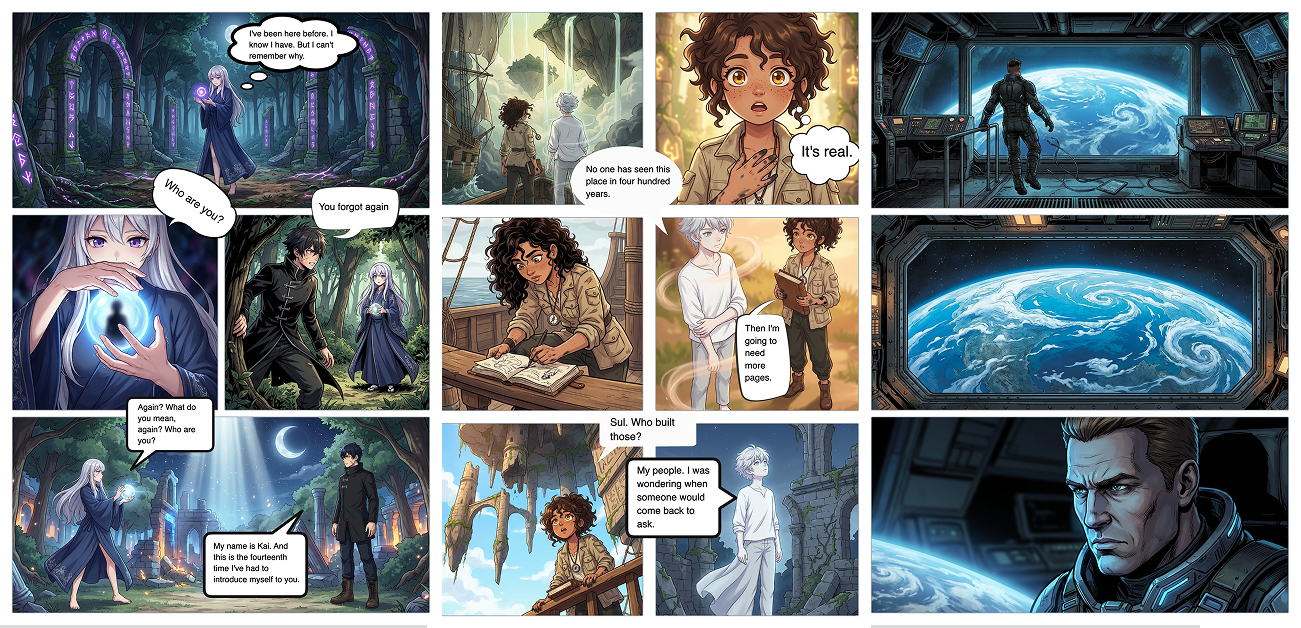
How to Choose the Right Art Style for Your Comic (A Genre-by-Genre Guide)
Art style is the single biggest decision you'll make for your comic — it sets tone, attracts the right readers, and shapes how every panel lands emotionally. Here's a practical guide to matching style to genre, audience, and story.
Comics History
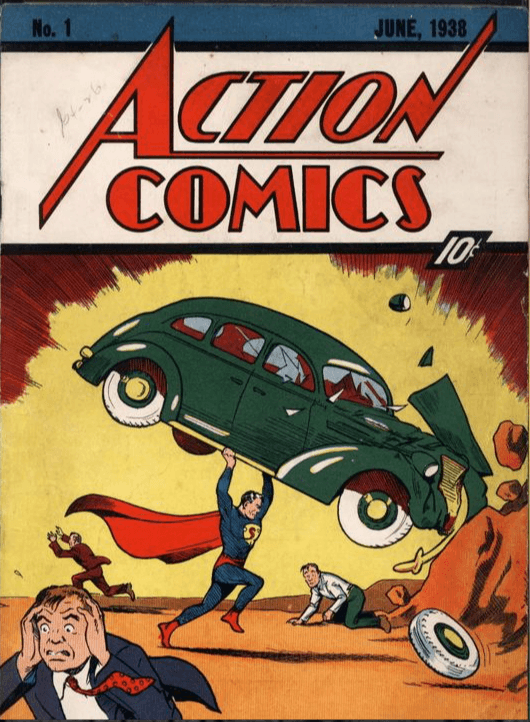
The Golden Age of Comics: How Superman in Action Comics #1 and Batman Launched a Superhero Empire
In June 1938, Action Comics #1 introduced Superman and ignited the Golden Age of Comics. One year later, Batman followed. At their peak in the 1940s, comic books sold 60 million copies a month — and an empire was born.
Comics History
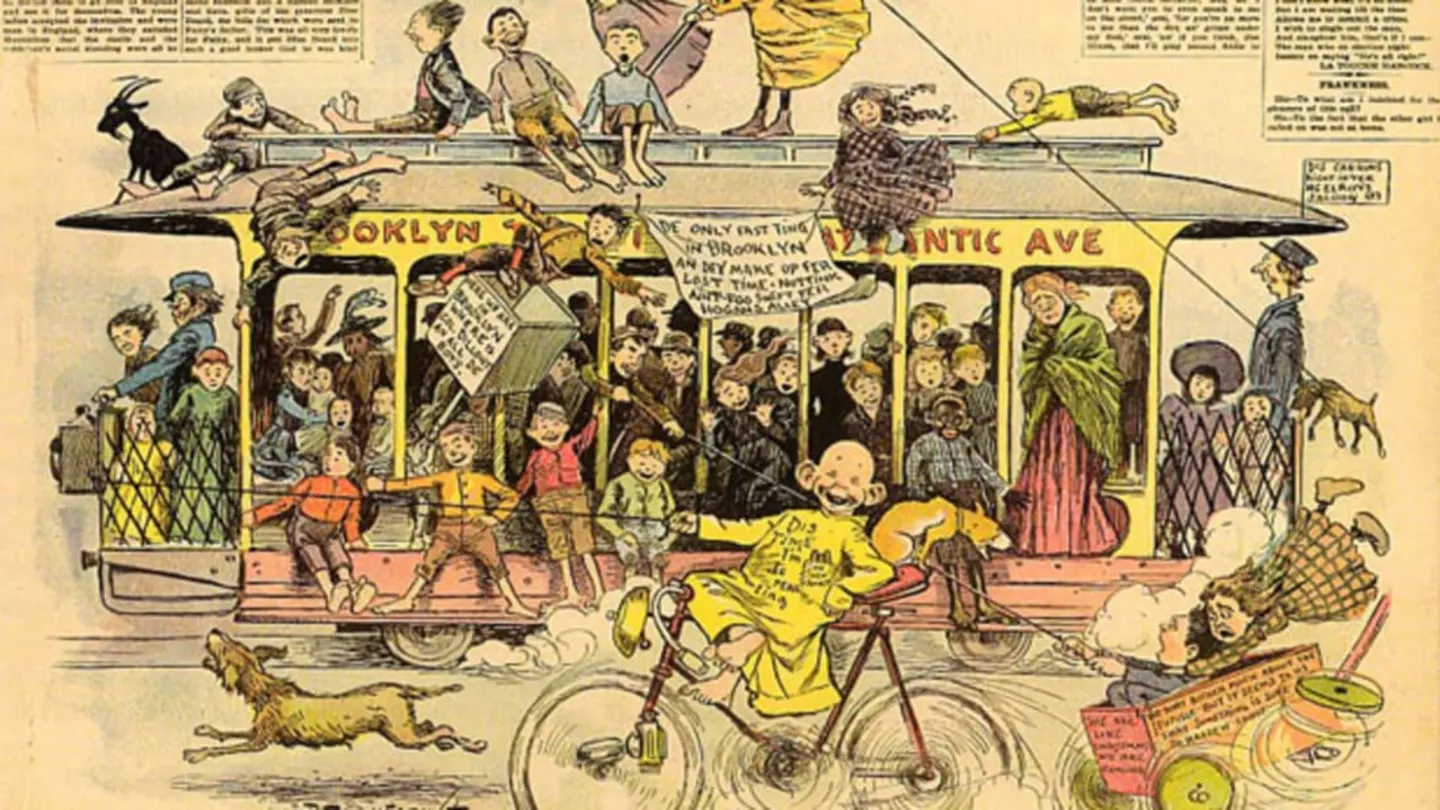
The Birth of the Modern Comic Strip: Richard Outcault's The Yellow Kid and the Dawn of a New Medium
In 1895, Richard Outcault's Yellow Kid became the first comic franchise — sparking the multi-panel format, recurring characters, and the commercial power of sequential art that define comics to this day.
Comics History
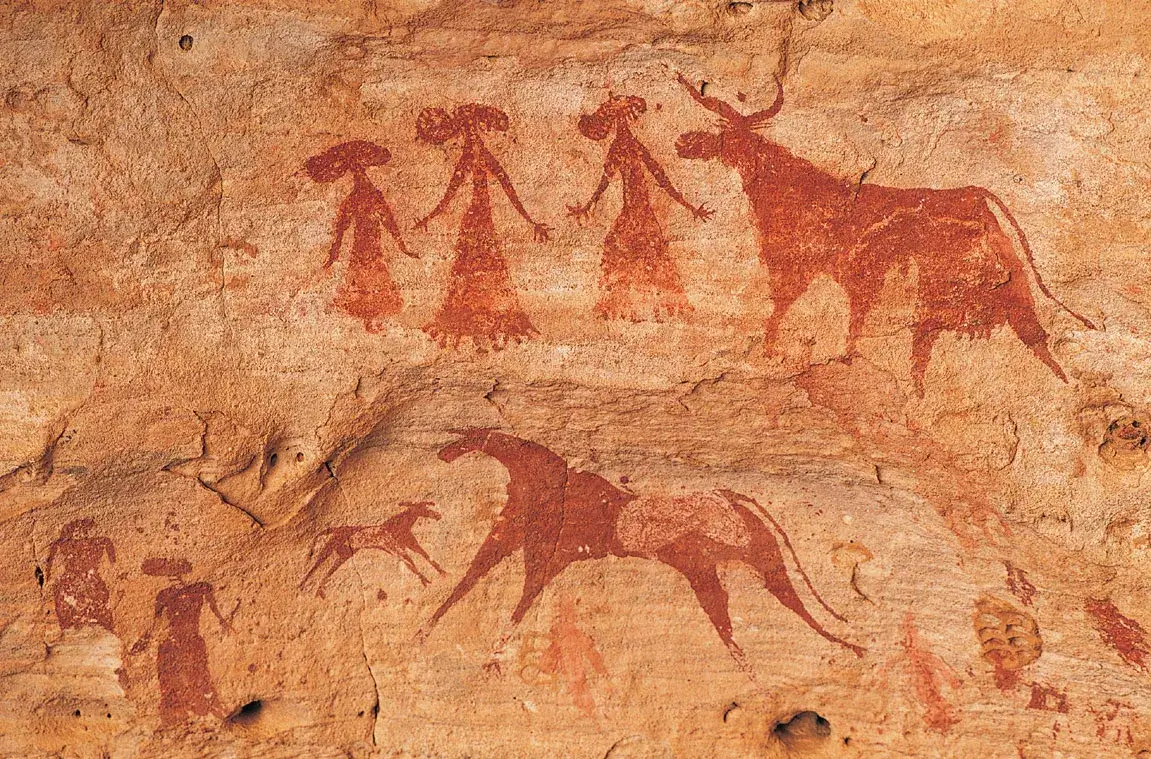
A Brief History of Comics: From Cave Paintings to AI Graphic Novels
Comics have been telling visual stories for 17,000 years — from Egyptian scrolls and the Bayeux Tapestry to Superman, Maus, manga, and today's AI-generated graphic novels. Here's the full journey.
Industry
The Real Cost of Making a Graphic Novel in 2026 (AI vs. Hiring an Illustrator)
Professional illustrators charge $50–$200 per page. A 100-page graphic novel can cost $40,000. Here's what the math actually looks like in 2026 — and how AI has changed the calculation completely.
Guides
How to Create a Graphic Novel with AI (No Drawing Skills Required)
You have a story. You just can't draw. Here's the full step-by-step process for creating a graphic novel with AI — consistent characters, your art style, published in an afternoon.
Character Consistency
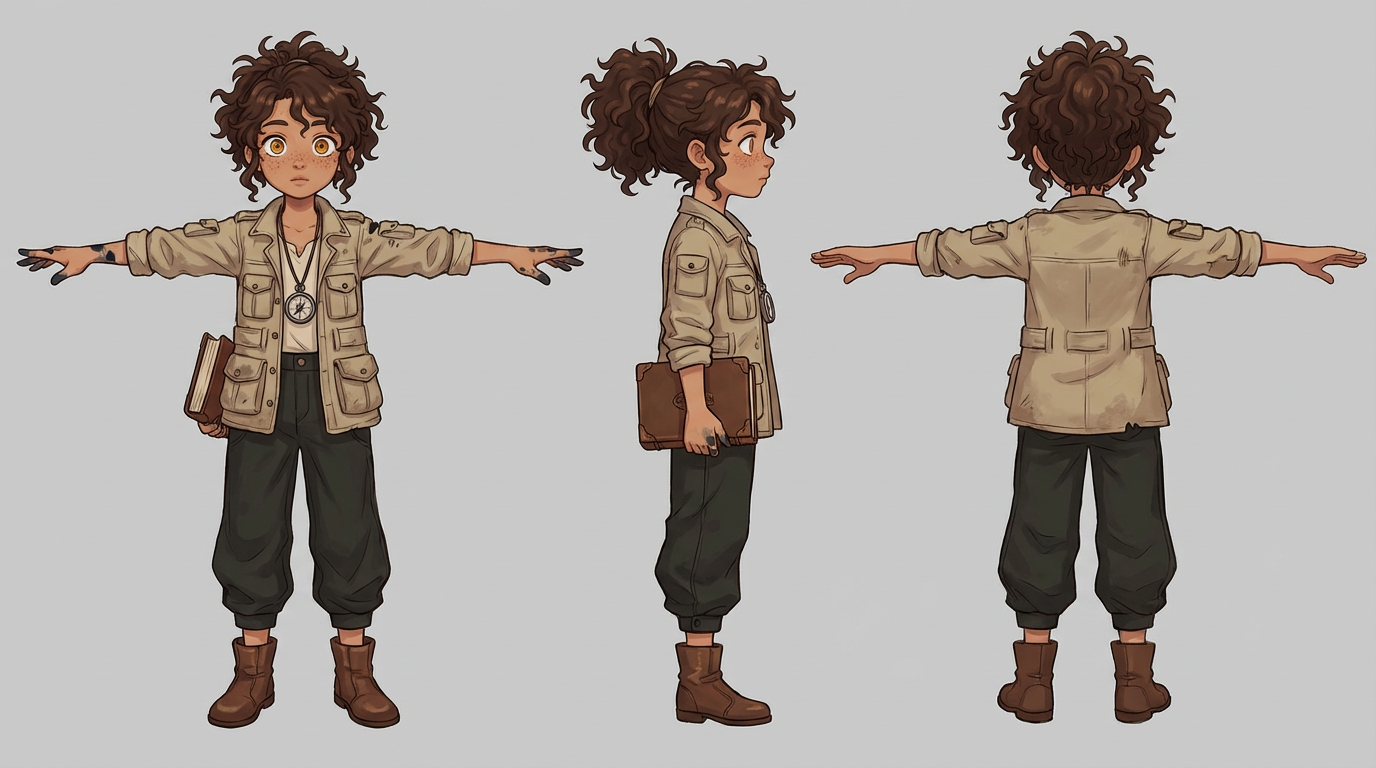
Why Your AI Comic Character Looks Different in Every Panel (And How to Fix It)
Character drift is the #1 frustration for AI comic creators. Here's exactly why it happens — and how to stop it for good.
Tool Reviews
The 7 Best AI Comic Generators in 2026 (Canva, Midjourney, Leonardo & More — Tested)
We tested the 7 best AI comic generators — Canva, Midjourney, Leonardo, Pixton, and more — on the one thing that makes or breaks a comic: keeping your character consistent across every panel. Here's the ranked winner, the best free options, and the tools that quietly fail.
Ready to create?
Stop reading.
Start creating.
Everything in this blog is about what you can build with YarnSaga. Credit packs from $6 — no subscription.