1986: The Year Comics Became Literature — Watchmen, The Dark Knight Returns, and Maus
May 25, 2026 · 7 min read
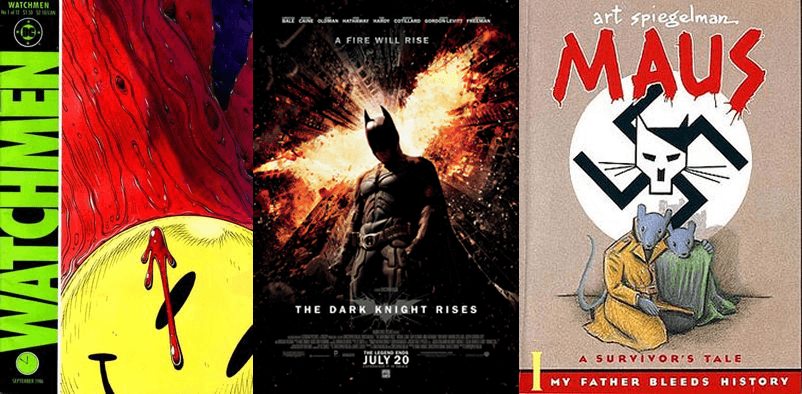
1986 was the year comics stopped being "for kids."
Three books came out within months of each other. None of them was supposed to change anything. None of them was marketed as a manifesto. But by the time the dust settled, the medium had been pulled — permanently — out of the spinner rack and onto the literature shelf.
Watchmen. The Dark Knight Returns. Maus.
For the first time, mainstream critics, libraries, and universities started treating comics the way they treated novels. Forty years later, every serious graphic novel still owes something to those three books.
Watchmen: The Superhero Eats Itself
Watchmen, written by Alan Moore and drawn by Dave Gibbons, was serialized by DC Comics between September 1986 and October 1987 — twelve issues that deconstructed the superhero from the inside out.
The premise was simple and brutal: what if costumed vigilantes were real people? Not paragons. Not symbols. Just people, with all the damage that goes with putting on a mask and assaulting strangers. The result is a cast of characters that includes a retired hero murdered in his apartment in the opening pages, a vigilante so far gone he keeps a journal full of fascist screed, an aging crime-fighter who can't sleep with her husband without the mask, and a god named Doctor Manhattan who has stopped caring about humans entirely.
Moore and Gibbons built the book like a Swiss watch — symmetrical issue structures, recurring smiley-face motifs, a nine-panel grid that bent and broke at moments of psychological collapse. The supporting "Tales of the Black Freighter" pirate comic embedded inside the main story commented on the main story in real time. Nothing in Watchmen was decorative.
In 2005, Time magazine named Watchmen one of the 100 best English-language novels published since 1923. Not best comics. Best novels — alongside The Great Gatsby, Catch-22, and Beloved.
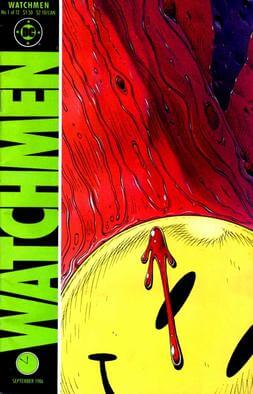
The Dark Knight Returns: Batman Grown Old
Frank Miller's The Dark Knight Returns, also published by DC in 1986, did to Batman what Watchmen did to the genre as a whole. It dragged the character out of camp and into the territory of tragedy.
Bruce Wayne is in his fifties. He hasn't been Batman in a decade. Gotham has rotted in his absence; a gang called the Mutants has taken the city, and the news is a 24/7 carnival of pundits debating vigilantism on screen. The Cold War is heating up. Superman has become a government enforcer. Robin is a thirteen-year-old girl. Nobody is okay.
Miller told the story in TV news chyrons, talking-head debates, internal monologue, and brutal four-panel grids that crashed open into full-page splashes when the violence escalated. The book is loud, ugly, and unmistakably political — and it proved that a superhero story could carry the weight of any literary genre you wanted to throw at it.
Every "dark and gritty" reboot of the last forty years is a child of The Dark Knight Returns. Nolan's Batman films, the entire post-2000 Batman comic line, the very idea that a superhero story can be about something other than punching — all of it traces back to Miller in 1986.
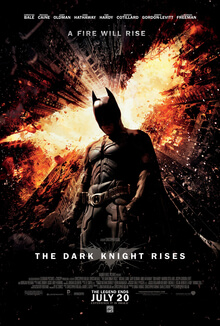
Maus: The Pulitzer Prize
And then there was Maus.
Art Spiegelman had been working on it for years. The first collected volume, My Father Bleeds History, was published in 1986. The second, And Here My Troubles Began, in 1991. Together they tell the story of Spiegelman's father, Vladek, a Polish Jew who survived the Nazi camps — and of Spiegelman himself trying to interview his father, decades later, in a small apartment in Queens.
The famous visual conceit — Jews drawn as mice, Nazis as cats, Poles as pigs — sounds, in summary, like a gimmick. In practice it does the opposite of cartoon distancing. It makes the horror more legible. The mice have human posture, human suffering, and human faces just under the surface; the cats grin like cats do, and that is somehow worse than any photograph.
But Maus isn't really a book about World War II. It's a book about a son trying to understand his father, and a father trying to survive his own son. It's a book about how trauma gets passed down. It just happens to use the Holocaust as the engine.
In 1992, Maus won the Pulitzer Prize. There was no Pulitzer category for comics; there still isn't. The Pulitzer board had to invent a "Special Award" to give it. It remains the only graphic novel ever to win one.
You can't put that genie back in the bottle. After Maus, the argument that comics couldn't be literature was over. The argument had been won, in public, by a panel of book critics who handed comics the most prestigious award in American letters.
_cover.jpg)
Why 1986 Mattered
Comics in 1985 were still mostly thirty-two-page, stapled, color pamphlets sold off a rotating wire rack at the drugstore. The audience was assumed to be ten-year-old boys. The medium was assumed to be disposable.
Comics in 1987 were being reviewed in The New York Times Book Review. Bookstores were carving out dedicated graphic-novel shelves. Libraries were cataloging them by ISBN instead of by issue number. Universities were starting to teach them in literature departments.
That shift happened in roughly eighteen months. Three books did most of the work.
- Watchmen proved comics could be as structurally and thematically ambitious as any prestige novel.
- The Dark Knight Returns proved superhero stories — the most "kids' stuff" subgenre of comics — could carry serious literary weight.
- Maus proved comics could handle the heaviest possible subject matter and be honored as literature for it.
After 1986, "graphic novel" wasn't a marketing trick anymore. It was a category. And critics, librarians, teachers, and readers had a vocabulary for what comics could be that they didn't have the year before.

The Long Shadow
Look at any "serious" graphic novel on the shelf today — Persepolis, Fun Home, Building Stories, Sabrina, Here — and you can trace its permission slip back to 1986. The idea that a graphic novel can be about anything, in any voice, with any structure, was earned by those three books in those eighteen months.
The format that started on cave walls 17,000 years ago and went mass-market in 1938 with Superman finally cleared its last barrier in 1986. After that, the only thing standing between most people and making a comic was the part that had always been hardest: drawing it.
That barrier is the one that's falling now.
Ready to write your chapter of the story? Create your first graphic novel on YarnSaga →
No drawing skills. No illustrator. Just your story.
Create your first story — no drawing skills needed
Characters stay consistent across every panel, automatically.
Request Early Access →More Articles
Explore YarnSaga