A Brief History of Comics: From Cave Paintings to AI Graphic Novels
April 12, 2026 · 11 min read
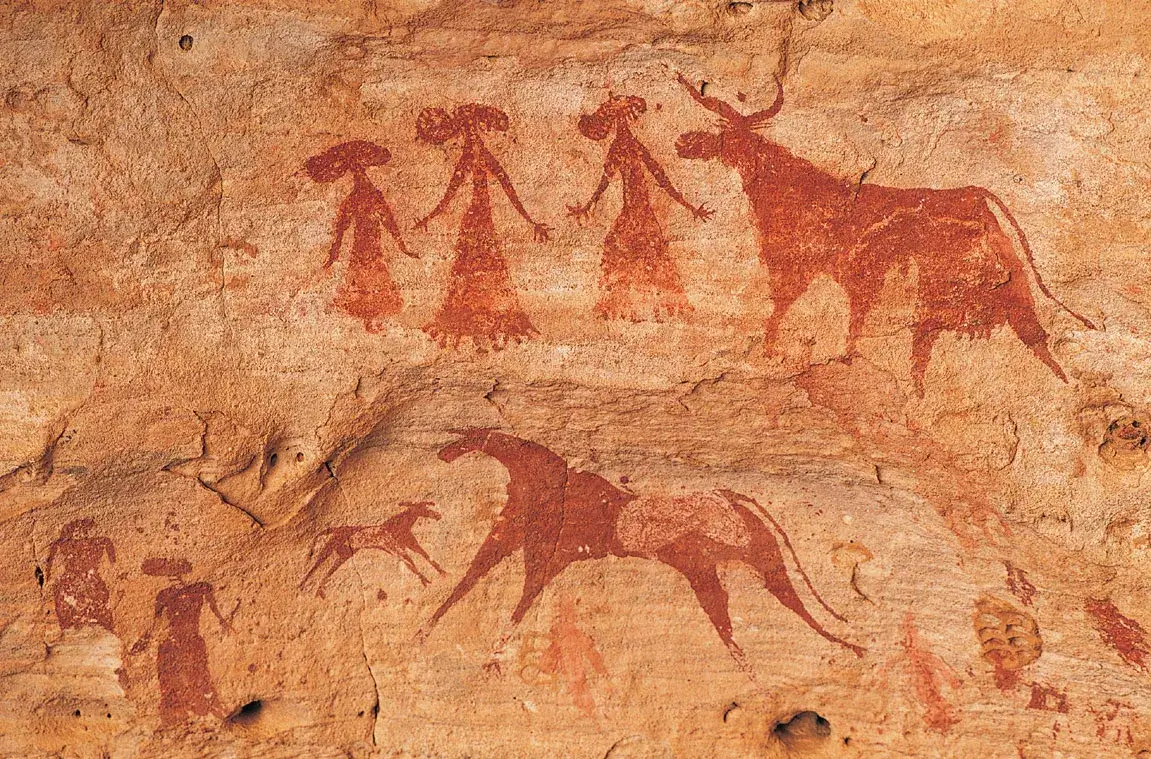
Comics have been telling visual stories for thousands of years. Long before Marvel, before Superman, before newspaper strips, humans were arranging images in sequence to tell stories that words alone couldn't capture. The history of comics isn't the history of a medium — it's the history of visual storytelling itself.
Here's the full journey: from cave walls to printing presses, from Golden Age superheroes to manga's global dominance, from webcomics to today's AI-generated graphic novels.
The Ancient Roots of Visual Storytelling
The instinct to tell stories through sequential images is as old as humanity. The cave paintings at Lascaux, France — estimated at 17,000 years old — show animals in motion, arranged in ways that suggest movement and narrative. These aren't isolated illustrations. They're the earliest known attempt to show something happening over time.
Ancient Egyptians refined this into a sophisticated visual language. The papyrus scrolls of the Book of the Dead arranged illustrated scenes in horizontal registers — sequential frames that followed the soul's journey through the underworld. Hieroglyphs and images worked together, text and picture reinforcing each other, centuries before the speech bubble was invented.
In 113 AD, the Romans carved Trajan's Column — a 98-foot marble column spiraling with a continuous narrative of military campaigns. It unfolds like a scroll turned vertical: 155 scenes, 2,662 figures, a single coherent story told entirely in sequential relief images. If you printed it flat, it would read like a comic strip.
The Bayeux Tapestry: The Medieval Graphic Novel
The Bayeux Tapestry (circa 1070 AD) is perhaps the most dramatic example of pre-modern sequential art. Stretched 70 meters long, it illustrates the Norman conquest of England in a sequence of vivid, action-packed scenes — complete with Latin text captions, recurring characters, dramatic battle panels, and even a moment where characters look directly at Halley's Comet in the sky.
It has heroes, villains, a clear narrative arc, and a battle scene that takes up one-third of the entire work. Swap the Latin captions for speech bubbles and it's a graphic novel. The format was there. The medium just hadn't been named yet.
William Hogarth and the Birth of Sequential Art
In 18th-century England, painter and engraver William Hogarth published illustrated series — A Rake's Progress (1735), Marriage A-la-Mode (1745) — that told morality stories across sequences of prints sold as sets. Each image advanced the narrative. Characters had consistent appearances across plates. Cause led to consequence, panel to panel.
Art historian David Kunzle and later comics theorist Scott McCloud have both cited Hogarth as a foundational figure in comics history. He understood instinctively what comics creators still know: that the space between images is where storytelling happens.
By the 19th century, Swiss artist Rodolphe Töpffer was producing illustrated satirical stories in booklet form — what many historians now call the first true "comics." His work influenced artists across Europe and eventually made its way to the United States.
The Newspaper Strip Era: 1895–1938
The modern comic strip was born in the newspaper circulation wars of the 1890s. Richard Outcault's The Yellow Kid, first published in the New York World in 1895, introduced a recurring cast of characters in sequential panel format — and became the first major comic character to appear in merchandise, advertising, and adaptation. Comics had their first franchise.
The early 1900s produced a golden era of newspaper strips. Little Nemo in Slumberland (1905) by Winsor McCay pushed visual experimentation to extraordinary heights — dreamlike page layouts, dynamic panel arrangements, and a sense of visual wonder that still reads as ahead of its time. Krazy Kat began in 1913, creating surrealist visual poetry that influenced generations of artists.
By the 1930s, adventure strips brought serial drama to the format: Dick Tracy (1931), Flash Gordon (1934), The Phantom (1936). Comics were already telling long-form stories — they just hadn't collected them into books yet.
The Golden Age: Superheroes Change Everything (1938–1950)
June 1938. Action Comics #1 introduces Superman for 10 cents. A man who can leap tall buildings, deflect bullets, and fight injustice — rendered in bold primary colors, dynamic action poses, and a format that could be read in 20 minutes on a bus.
The Golden Age of comics had begun. Batman followed in 1939. Wonder Woman in 1941. Captain America in 1941. During World War II, superhero comics were shipped to American troops overseas. At their peak in the 1940s, comic books sold 60 million copies per month in the United States alone.
This was the moment comics became a mass medium — accessible, affordable, disposable, and wildly popular. The format had found its audience.
The Dark Years: The Comics Code (1954)
The 1950s brought a backlash. Psychiatrist Fredric Wertham published Seduction of the Innocent (1954), claiming comics caused juvenile delinquency. Congressional hearings followed. The industry, fearing government regulation, created the Comics Code Authority — a self-censorship body that banned depictions of violence, horror, moral ambiguity, and complex villains.
EC Comics — publisher of groundbreaking horror and crime titles — was effectively killed. Crime and horror comics vanished from newsstands. The medium narrowed dramatically. What survived was sanitized to the point of blandness.
The creative cost was enormous. The cultural cost was even larger — it set back mainstream acceptance of comics as a serious artistic medium by decades.
The Silver Age: Stan Lee and the Marvel Revolution (1956–1970)
The Silver Age began with DC Comics reviving and reimagining its superhero line — the Flash, Green Lantern, the Justice League — with a cleaner, more scientific aesthetic. But the real revolution came from Marvel.
Stan Lee, Jack Kirby, and Steve Ditko created something that had never existed before: superheroes with problems. Peter Parker was a broke teenager with social anxiety. The X-Men were persecuted outcasts. Tony Stark was an alcoholic. The Fantastic Four argued with each other.
Marvel's heroes reflected real human struggle. They lived in real cities — New York, not Metropolis. They had continuity: events in one issue affected the next. The universe cohered. Readers didn't just buy a comic — they invested in an ongoing story world. This was the birth of the shared universe as a commercial and artistic strategy.
Underground Comix and the Bronze Age (1970s)
The 1960s counterculture produced underground comix — self-published, uncensored, distributed through head shops rather than newsstands. Robert Crumb's Zap Comix, Gilbert Shelton's Freak Brothers, and dozens of other titles explored sexuality, drug culture, and political satire that the Comics Code would never have permitted.
Underground comix proved that comics could address adult themes — not just violence and horror, but philosophy, autobiography, and social criticism. The medium's range expanded dramatically.
Mainstream comics followed in the Bronze Age (roughly 1970–1984): darker themes, more complex characters, social issues brought into superhero narratives. The Green Arrow and Green Lantern famously tackled drug addiction in 1971 — with explicit Comics Code Authority disapproval and a real public debate that followed.
The Modern Age: Comics as Literature (1986–)
1986 was a pivotal year. Three works published that year changed how the world understood what comics could be:
- Watchmen by Alan Moore and Dave Gibbons — a deconstruction of superhero mythology that used every formal property of comics (panel layout, gutters, parallelism, color symbolism) as storytelling tools. Time magazine later named it one of the 100 best English-language novels since 1923.
- The Dark Knight Returns by Frank Miller — a dystopian reinvention of Batman that showed superheroes could carry genuinely literary weight.
- Maus by Art Spiegelman — a memoir of the Holocaust told through anthropomorphic animals. It won the Pulitzer Prize in 1992. Not the Pulitzer for comics. The Pulitzer. Full stop.
The term "graphic novel" — which actually predates this period, used by Will Eisner as early as 1978 — became mainstream shorthand for a comics work of literary ambition. Bookstores started carrying them. Critics started reviewing them. Comics had arrived as literature.
Manga: The Other World
While American comics were fighting for cultural legitimacy, Japan's manga industry had been running in parallel since the postwar era. Osamu Tezuka — often called the "God of Manga" — transformed Japanese comics in the late 1940s with Astro Boy and Kimba the White Lion, borrowing cinematic techniques (close-ups, dramatic angles, expressive eyes) and applying them to sequential art.
By the 1980s and 90s, manga had developed a distinct visual vocabulary: speed lines, sweat drops, expressive exaggeration, panel silence used for emotional weight. Genres ranged from children's adventure to literary drama to romance to horror. The weekly anthology magazine became a cultural institution — Weekly Shōnen Jump at its peak sold 6.5 million copies per week.
Global export of manga accelerated through the 2000s and 2010s. Today, manga represents the largest and fastest-growing segment of the comics market worldwide. Styles like manhwa (Korean) and manhua (Chinese) have grown significantly on the same model.
Webcomics and the Death of the Gatekeepers (1990s–2010s)
The internet did to comics what it did to music: it eliminated the gatekeepers. You no longer needed a publisher, a distributor, or a print run. You needed a story and a way to post it.
Penny Arcade (1998) built a community around video game culture. xkcd (2005) made stick figures into philosophical meditation. Homestuck pushed the form into animation, music, and interactivity. Webtoon (2004) built an entire platform for the vertical-scroll format adapted to mobile reading — and today hosts over 800,000 creator accounts and 100 million monthly active users.
The barrier to entry collapsed. Anyone with a story to tell and enough skill to draw could find an audience. Webcomics proved that the audience for visual storytelling was much larger than the direct market had ever served.
But "enough skill to draw" was still the barrier. Storytelling ability and drawing ability are completely different skills. Most people have one without the other. That tension remained unresolved — until recently.
AI and the Next Chapter
The history of comics is really a history of barriers falling. Printing made visual stories reproducible. Newspapers made them mass-distributed. Bookstores made them respectable. The internet made them self-publishable. Each step expanded who could create and who could read.
The final barrier — drawing skill — is falling now.
AI image generation has made it possible to produce illustrated panels from plain English descriptions. The challenge that remained — generating the same character consistently across dozens of panels, the way a real illustrator would — is now being solved by purpose-built tools designed specifically for sequential storytelling.
The emotional impulse behind comics has never changed. Humans want to see stories — not just read them. They want characters with faces, scenes with depth, action with visual impact. That impulse is 17,000 years old. What's changed is who gets to act on it.
What This History Tells Us
Every expansion of the comics form — from print to color, from newsstands to bookstores, from gatekept publication to webcomics — brought in storytellers who were previously excluded. Each time, the medium got richer, not poorer.
The same pattern is happening now. The people with stories to tell — who had ideas for decades but couldn't draw, couldn't afford illustrators, couldn't navigate complex AI tools — are getting their turn.
That's not a threat to the form. That's the form continuing to do what it has always done: find new ways to let humans tell visual stories to each other.
Ready to write your chapter? Create your first comic on YarnSaga →
No drawing skills. No illustrator. Just your story.
Create your first story — no drawing skills needed
Characters stay consistent across every panel, automatically.
Request Early Access →More Articles
Explore YarnSaga