The Real Cost of Making a Graphic Novel in 2026 (AI vs. Hiring an Illustrator)
April 10, 2026 · 10 min read
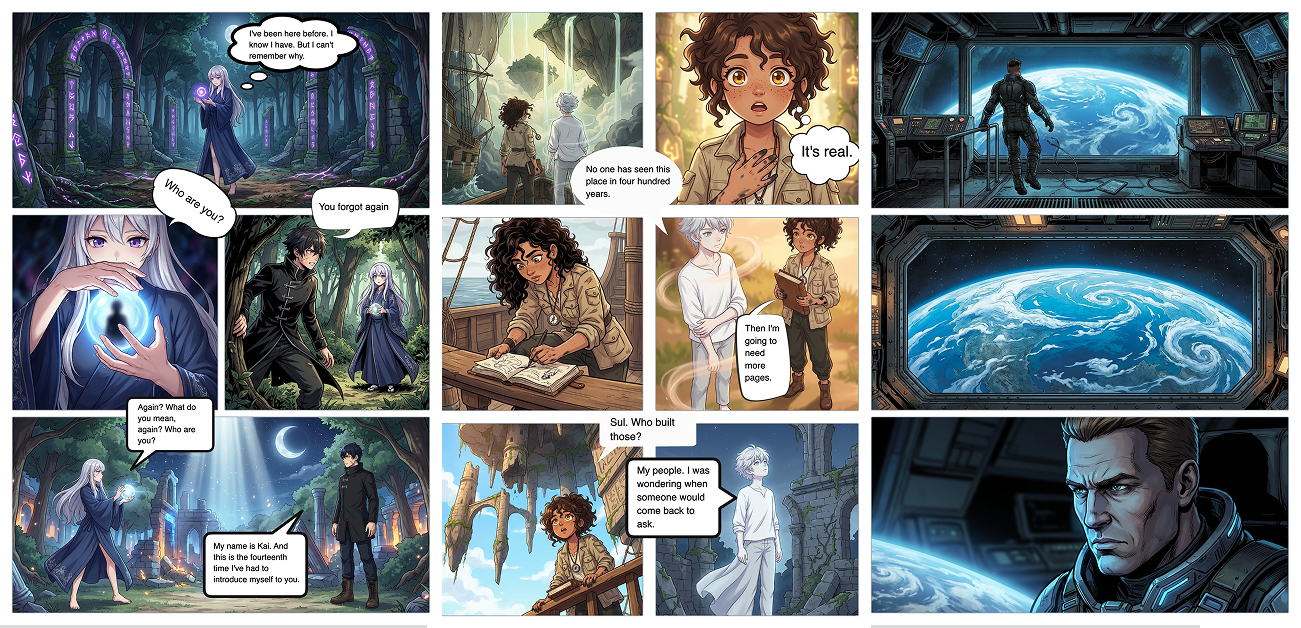
You've got the story. The characters are fully formed in your head. You know exactly how the opening scene should look — the lighting, the expression, the moment everything changes.
Then you find out what a professional illustrator costs, and the whole thing stalls.
This is where most graphic novel projects die — not from lack of creativity, but from the math not working out. Let's actually do that math, because the numbers have changed significantly in 2026 and most people don't know it.
The Real Cost of Hiring a Professional Illustrator
Freelance comic illustrators typically charge $50–$200 per page. That's the honest range you'll find on platforms like Fiverr Pro, Upwork, or through direct artist commissions. The wide spread comes down to style, experience, and whether you want someone capable of maintaining character consistency across a full project.
Here's what that looks like across a real graphic novel:
- Short story (20 pages): $1,000 – $4,000
- Single chapter / mini-series (48 pages): $2,400 – $9,600
- Full graphic novel (100–150 pages): $5,000 – $30,000
- Ongoing series (per issue, 24 pages): $1,200 – $4,800 per issue
And those numbers are just for pencils and inks. If you want color, that's typically another 30–50% on top. Lettering (speech bubbles, captions, sound effects) is another $200–$600 per issue. Cover art is usually priced separately from interior pages.
The full budget for a self-published graphic novel — illustration, color, lettering, cover — realistically lands between $8,000 and $40,000 for a standard 100-page story.
The Hidden Costs Nobody Mentions
The per-page rate isn't the whole story. There are several costs that catch first-time creators off guard:
Time
A professional illustrator working full-time produces roughly 1–3 finished comic pages per day. For a 100-page graphic novel, you're looking at 2–6 months of production time — if your illustrator is fully dedicated to your project, which they almost never are. Most freelancers juggle multiple clients, which means your 100-page novel might take 12–18 months to complete.
That timeline has a real cost: your story loses relevance, you lose momentum, and a lot of projects simply never finish.
Revision Rounds
Most illustrators include 1–2 rounds of revisions in their rate. Anything beyond that gets charged by the hour ($40–$100/hr) or per-page again. If your vision evolves mid-project — which it usually does — revisions can add 20–30% to your final bill.
Character Consistency Work
Maintaining consistent characters across a long story is genuinely difficult work. Professional illustrators typically charge a premium for character model sheets ($300–$800 each) that serve as the visual reference guide for the whole project. Some include this in their rate; many don't.
Communication Overhead
Briefing an illustrator, reviewing drafts, explaining what you meant vs. what they drew, coordinating schedules across time zones — this is real time. For a 100-page project, expect to spend 40–80 hours of your own time managing the production. That's a part-time job.
What About Mid-Range Options?
Some creators try to reduce costs by hiring less experienced illustrators at $15–30/page. The tradeoff is almost always consistency. Newer illustrators are still developing their ability to maintain a character's appearance across dozens of scenes — the same face, the same hair, the same costume in different lighting and angles. At lower price points, drift is common, and corrections cost time.
There's also the style fit problem: even if an illustrator is technically skilled, their natural style might not match your story. Finding someone whose work genuinely matches your vision takes time, and you often don't find out it's a mismatch until 20 pages in.
The AI Cost Comparison
This is where the math gets interesting. AI graphic novel creation tools have matured significantly, and the cost structure is fundamentally different.
With a tool like YarnSaga, you're generating scenes (individual panels) at a per-scene cost. At current rates, a typical graphic novel page costs $0.40 – $0.80 to generate depending on the complexity and number of panels.
Let's run the same comparison:
- Short story (20 pages): $8 – $16
- Single chapter / mini-series (48 pages): $20 – $38
- Full graphic novel (100–150 pages): $40 – $120
- Ongoing series (per issue, 24 pages): $10 – $20 per issue
The difference isn't marginal. It's 100x cheaper at the low end, and more like 300x cheaper at the high end.
But What About Quality?
This is the right question to ask, and the honest answer is: it depends on what you mean by quality.
In 2022, "AI art" meant obvious artifacts, melting hands, and inconsistent everything. That's not what 2026 AI looks like. Modern AI illustration — especially purpose-built tools for comics and graphic novels — produces work that most readers, encountering it for the first time, can't immediately distinguish from professional illustration.
The specific things that have improved dramatically:
- Character consistency — this was the fatal flaw. It's now solvable. Systems that use character reference images (not just text descriptions) can maintain the same face, hair, and costume across 100+ panels reliably.
- Style range — you can generate in manga, noir, superhero, Studio Ghibli-influenced, bande dessinée, watercolor, gothic, and more. These aren't generic — each has real visual identity.
- Panel composition — AI models trained specifically on comics understand panel framing, action lines, and sequential storytelling in ways that general image generators don't.
What AI still doesn't match professional illustration on: extremely specific facial expressions with subtle emotional nuance, highly detailed crowd scenes, and fully custom page layouts that deviate from standard grids.
For most graphic novel projects — the romance, the fantasy, the thriller, the coming-of-age story — AI is now a genuine option, not a compromise.
The Time Cost Comparison
Cost per page tells part of the story. Time tells the rest.
A professional illustrator takes 1–3 days per finished page. AI generates a panel in 20–60 seconds. A full graphic novel page (4–6 panels) takes roughly 5–10 minutes to generate, review, and move on.
That same 100-page graphic novel:
- With a professional illustrator: 2–18 months (depending on exclusivity)
- With AI tools: Days to a few weeks (at a pace you control)
The speed difference isn't just about convenience — it changes the creative process entirely. When you can iterate in seconds, you experiment more freely. You try a different scene angle, a different expression, a different panel order. The creative loop gets tighter. Stories get better.
When to Still Hire an Illustrator
Being honest about this: there are still situations where hiring a professional illustrator is the right call.
- You have a very specific visual style in mind that requires a human artist's hand and artistic signature — where the art itself is part of the product's unique identity.
- You need print-ready files at very high resolution (300+ DPI) for commercial offset printing and the current AI output resolution isn't sufficient for your production specs.
- You want a collaborator, not just execution — someone who brings creative ideas to the visual storytelling, not just renders your descriptions.
- Budget isn't a constraint and premium craft is the point.
Outside of those situations? The math is increasingly hard to argue against.
The Hybrid Approach
Many creators in 2026 are using a hybrid workflow: AI for the bulk of the story, professional illustration for key moments — the cover, the climactic splash page, the one image that defines the whole story.
This captures the economics of AI (fast, cheap, consistent for high-volume work) while investing professional budget where it has the most impact. A stunning cover illustration ($200–$400) on a story that cost $40 to generate is still a total budget of $440 — and that story is now done instead of waiting two years for full professional production.
The Real Cost Question
The cost of making a graphic novel isn't just measured in money. The real cost is whether the story actually gets made.
Every year, thousands of graphic novel ideas die at the moment someone finds out what professional illustration costs. That's not a creative failure — it's a resource failure. The story was good. The money wasn't there.
The tools available in 2026 have changed that calculation. For most creators, the question is no longer "can I afford to make this?" The question is "do I have 10 minutes to start?"
Your story deserves an answer.
Create your first story — no drawing skills needed
Characters stay consistent across every panel, automatically.
Request Early Access →More Articles
Explore YarnSaga