Children's Book Style, Redrawn: Clean Ink Line and Smooth Watercolor
November 24, 2026 · 4 min read
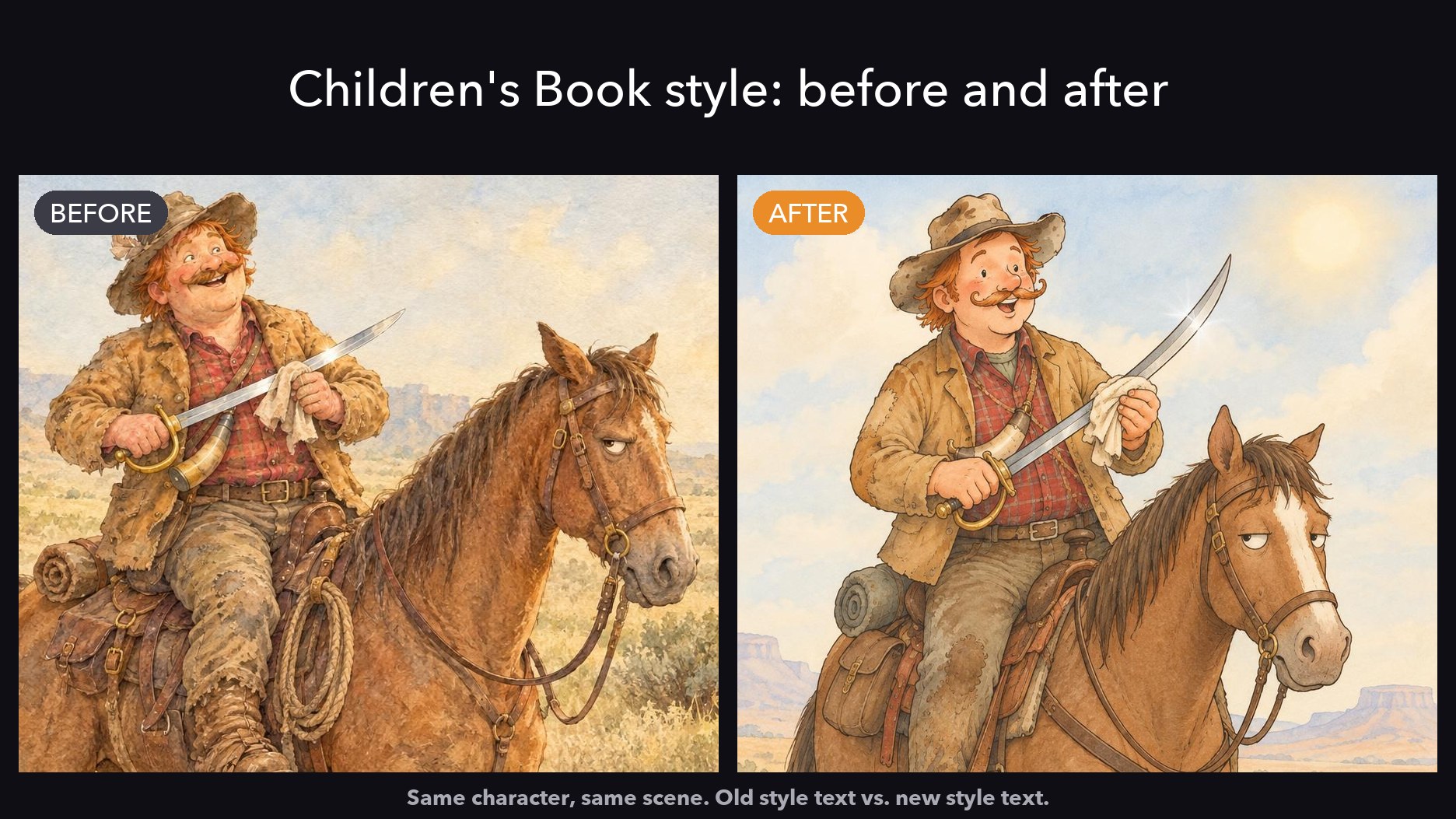
Children's Book is our watercolor picture-book style, and its own cover set the bar: a clean ink outline, soft transparent colour, simple sweet faces, warm gentle light. Lately the pictures it produced inside stories were drifting away from that cover. The paint looked rippled and smudged, the outline got lost under the colour, and faces turned into detailed caricatures. It looked more like a heavy adult painting than a page from a picture book.
So we rewrote the style from scratch and tested it scene by scene against the cover. Here is the same character in the same scene, before and after.
Same character, same scene. Left: the old Children's Book style. Right: the new one.
What was wrong with the old look
Watercolor has a reputation for blooms, granulation and paper texture, and the old style asked for all of them. The image generator took that too literally and pushed it everywhere:
- Ripple on everything. Jackets, trousers, horses, grass and even the sky were covered in a blotchy, sponge-like mottle.
- Lost outlines. The colour swallowed the ink line, so figures stopped reading cleanly at a glance.
- Over-detailed faces. Wrinkles, pores and teeth replaced the simple dot eyes and rosy cheeks a children's book needs.
- Cinematic lighting. Sunsets blazed orange and red, which is great for an action comic and wrong for a bedtime story.
What changed
The new version of the style describes a classic ink-and-watercolor picture book and is strict about it:
- A clear ink outline in deep sepia brown around every figure and object. The drawing carries the picture, and colour sits underneath it.
- Smooth, even washes. Each area gets one clean transparent fill plus one soft shadow tone. No ripple, speckle, sponge marks or smears.
- Clean clothes and animals. Even a dusty, ragged character is drawn tidy. Wear shows up as a neat sewn-on patch, not as mud splashes.
- Simple, friendly faces: dot eyes, a small nose, rosy cheeks, soft rounded proportions.
- Gentle light and fresh colour. Golden ochres, leaf greens, clear sky blues. Even sunsets and night scenes stay soft.
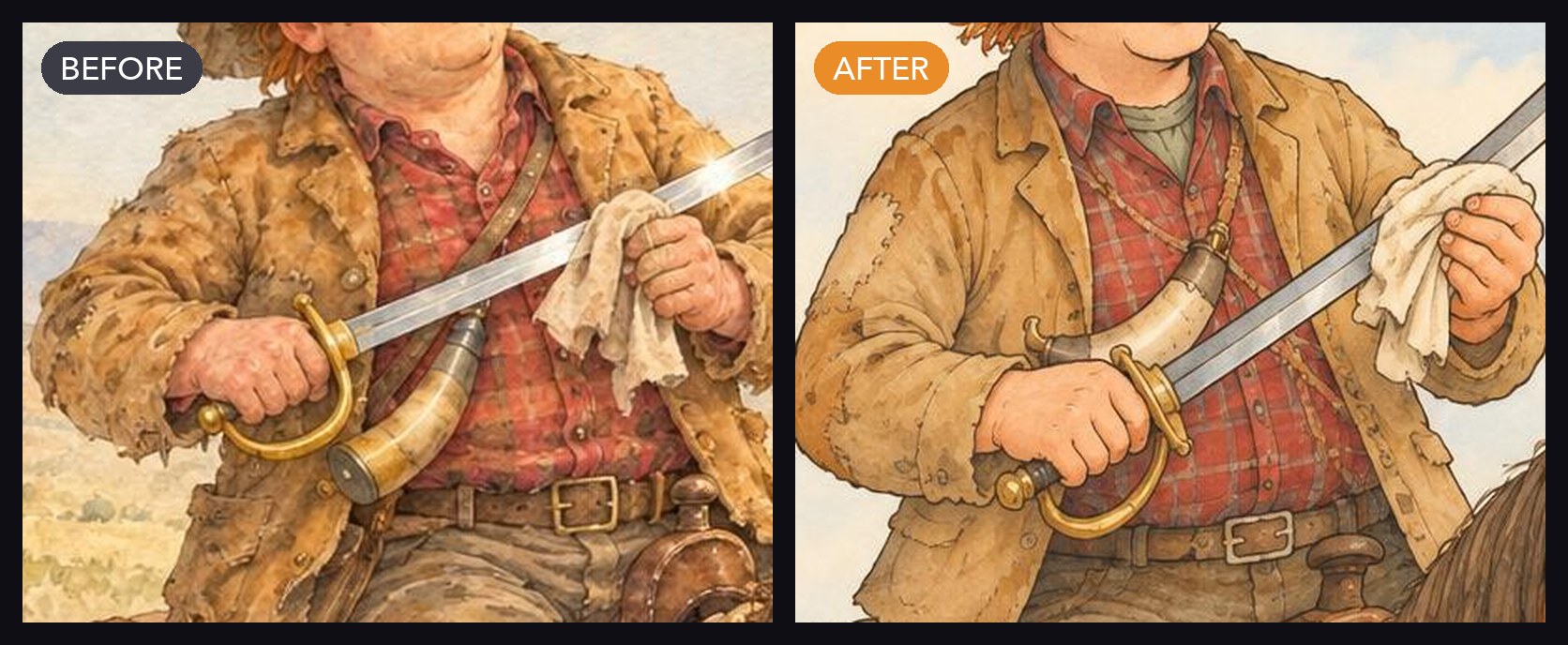
Up close: the mottled texture is gone, and the ink line is back in charge.
What makes an illustration look like a children's book
Working on this update reminded us what actually makes a picture read as "children's book" rather than just "watercolor":
- Readability first. A young reader takes in the whole picture in a second. Clear outlines and calm colour areas make every character and object easy to find.
- Restraint in texture. Real picture-book watercolor is mostly smooth, transparent washes. The texture is a quiet background quality, not the subject.
- Simple faces with big feelings. Two dots and a curve can show joy, surprise or worry more clearly than a realistic face.
- Warmth. Soft daylight, rounded shapes and friendly colour tell the reader that the world of the story is a safe place to be, even when something exciting happens.
If you're still deciding which look fits your story, our guide on how to choose an art style for your comic compares styles by genre and audience.
Same character on every page
A picture book only works if the hero looks the same on page one and page twenty. The new style draws a cleaner character sheet too, and every scene uses that sheet as the character's reference: the same face, hair, clothes and props from panel to panel.
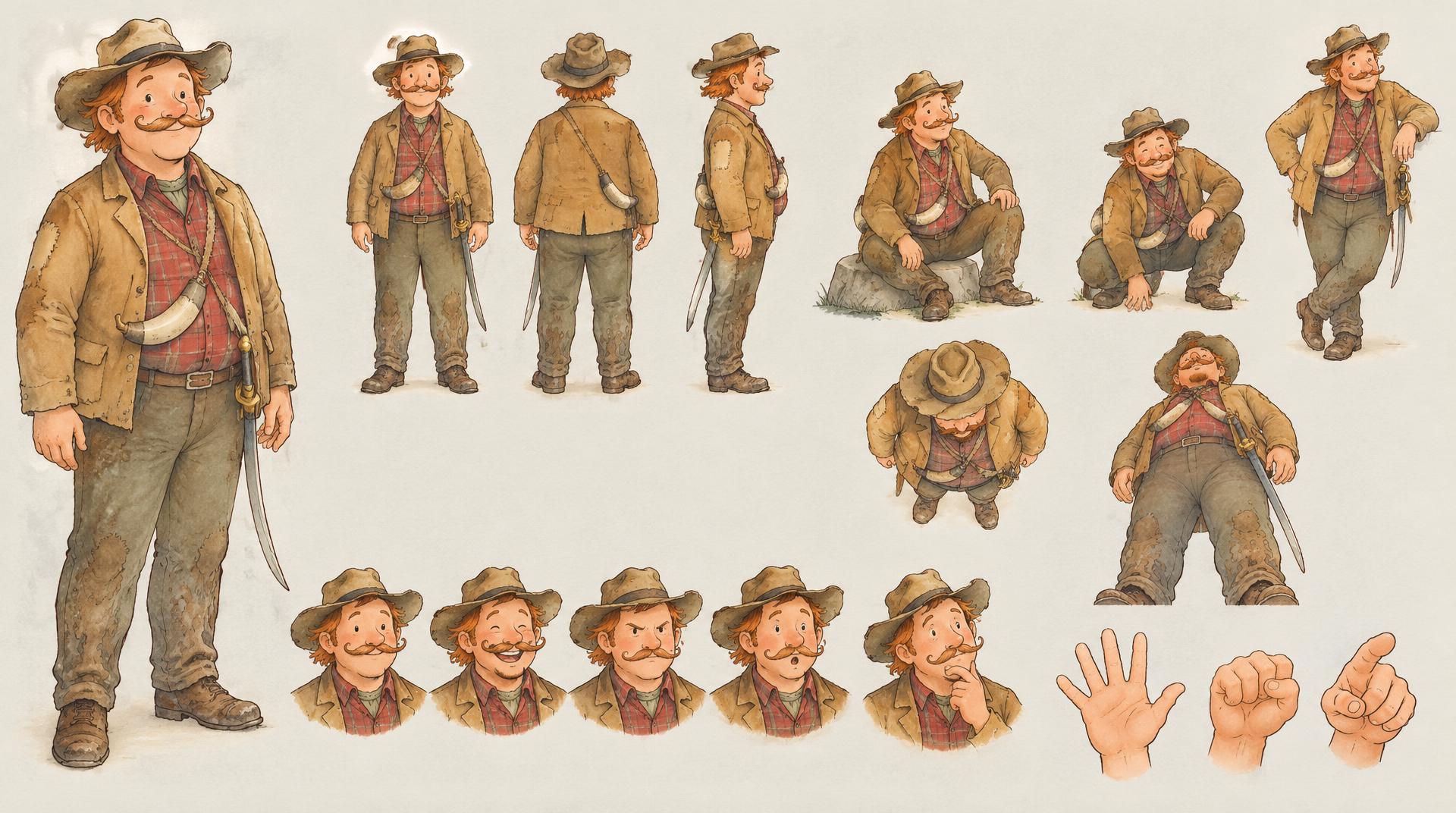
A character sheet in the new style: poses, expressions and hands, all with the same clean line.
For more on keeping characters stable across a whole book, see how to keep your AI comic characters consistent.
Already have a story in this style?
Every new scene you generate in Children's Book now uses the new look. One tip: characters created before this update still have their old, textured character sheet, and new scenes copy a lot from that sheet. For the cleanest result, regenerate the character sheet first, then redraw your scenes.
What it's great for
- Picture books and bedtime stories for your own kids, nieces and nephews, or grandchildren.
- Fables and fairy tales with talking animals, forests and cosy cottages.
- Classroom stories: illustrated lessons, reading practice and student-written books. More ideas on our page for educators and teachers.
- Personal gifts: a story starring a real child or family, made from a photo.
Try it
The updated style is live now. Create a new story and pick Children's Book from the art style list, or browse more examples on the Children's Book style page and the full art style library. If you're writing a longer picture book, the authors and storytellers page shows how to plan it page by page.
Spotted something in a style that doesn't look right? Email me. This update started because the pictures stopped matching the cover, and we'd rather hear about it early.
Open the app and make your picture book today.
Create your first story — no drawing skills needed
Characters stay consistent across every panel, automatically.
Request Early Access →More Articles
Explore YarnSaga