Introducing Manga (Black & White): Ink, Screentone, and the Look of a Printed Manga
October 8, 2026 · 5 min read
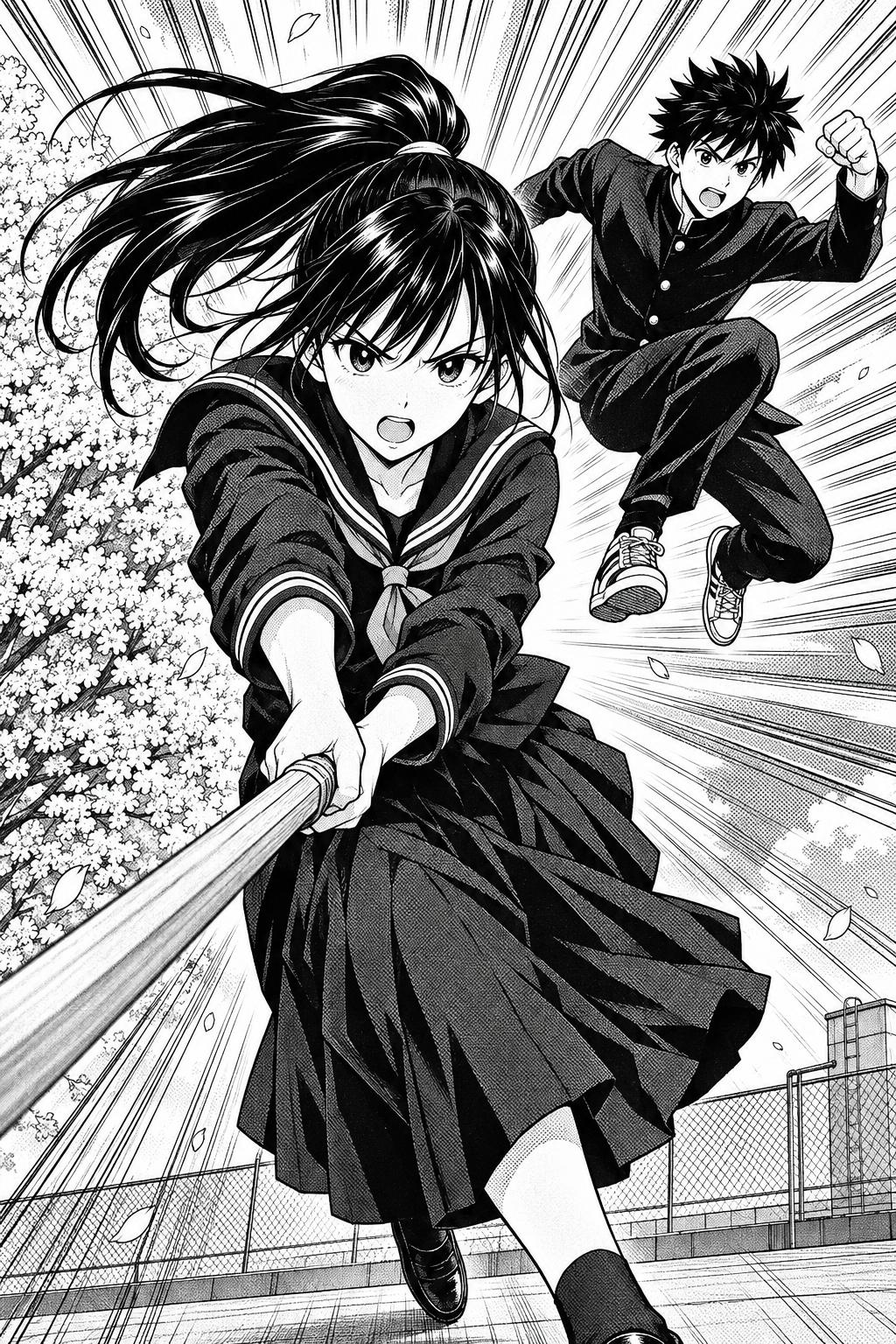
One of our creators wrote in with a fair point: we had a Manga / Anime style, but it was colour anime. Real manga, the kind you buy in a bookshop in Tokyo, is black and white. Ink on paper, dot screentone for the shading, speed lines when something moves fast. Noir didn't cover it either, because noir is Western crime comics, not manga.
So we built it. Meet Manga (Black & White), a new art style that draws your story the way a printed manga chapter looks, with your characters staying the same on every page.
A panel in the new Manga (Black & White) style.
What the Manga (Black & White) style looks like
There is no colour anywhere in the image. Everything is built from three things:
- Ink line. A fine pen line that tapers at the end of each stroke: heavier around figures, finer on faces and hair.
- Screentone. Mid-tones are made from regular dot patterns and clean hatching, never a soft grey wash. Shadows are solid black or a darker tone with a hard edge.
- Bare white paper. Eye highlights, the streaks in dark hair, rain, and light are left as untouched white, which is what makes a manga page sparkle.
Action scenes get radiating speed lines; dramatic close-ups get focus lines that pull your eye straight to a face. Faces follow manga conventions: large eyes with a solid black pupil and a bright highlight, a small nose, a simple mouth.
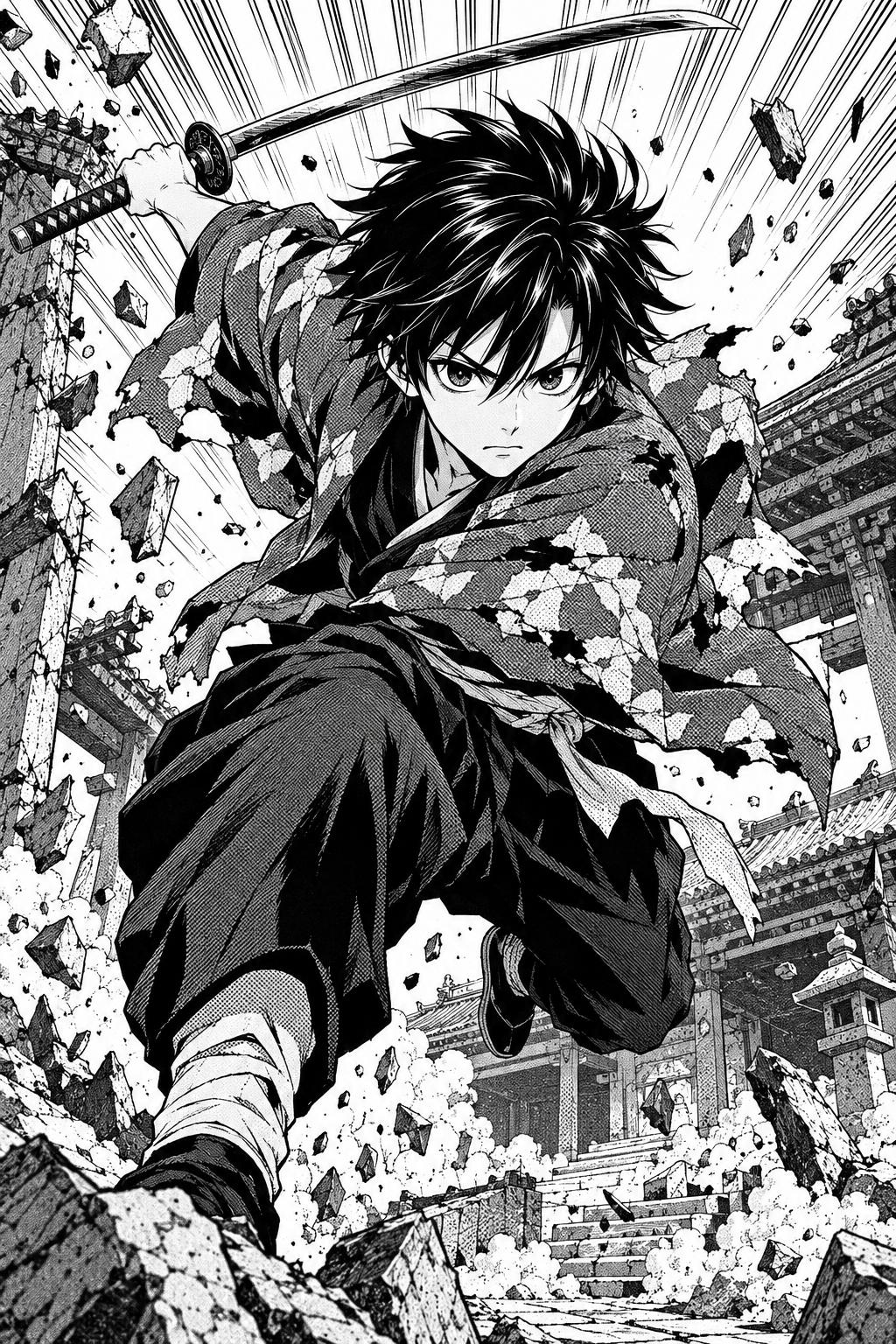
Speed lines and solid blacks carry the motion.
Why manga is black and white in the first place
Manga grew up in weekly anthology magazines, printed on cheap paper in enormous runs, with each chapter drawn in days. Colour was too slow and too expensive, so artists made black and white do all the work. Ink carried the line, solid black carried the drama, and screentone (sheets of printed dots, cut out with a knife and pressed onto the page) carried the shading. That constraint became the look. Even today, when everything is drawn digitally, most manga is still published in black and white, and artists still recreate the screentone texture on purpose.
Black-and-white manga vs colour anime: which one to pick
YarnSaga now has two manga styles, and they are good at different things:
- Manga (Black & White): ink and screentone, the look of a printed manga page. Pick it when you want your story to read like a real manga chapter and the drama comes from contrast, light and shadow, and expression.
- Manga / Anime: flat cel colour, the look of an anime screenshot. Pick it when colour carries the mood, or when people will mostly see your panels one at a time on social media.
Still unsure? Our guide on how to choose the right art style for your comic walks through matching style to genre and tone.
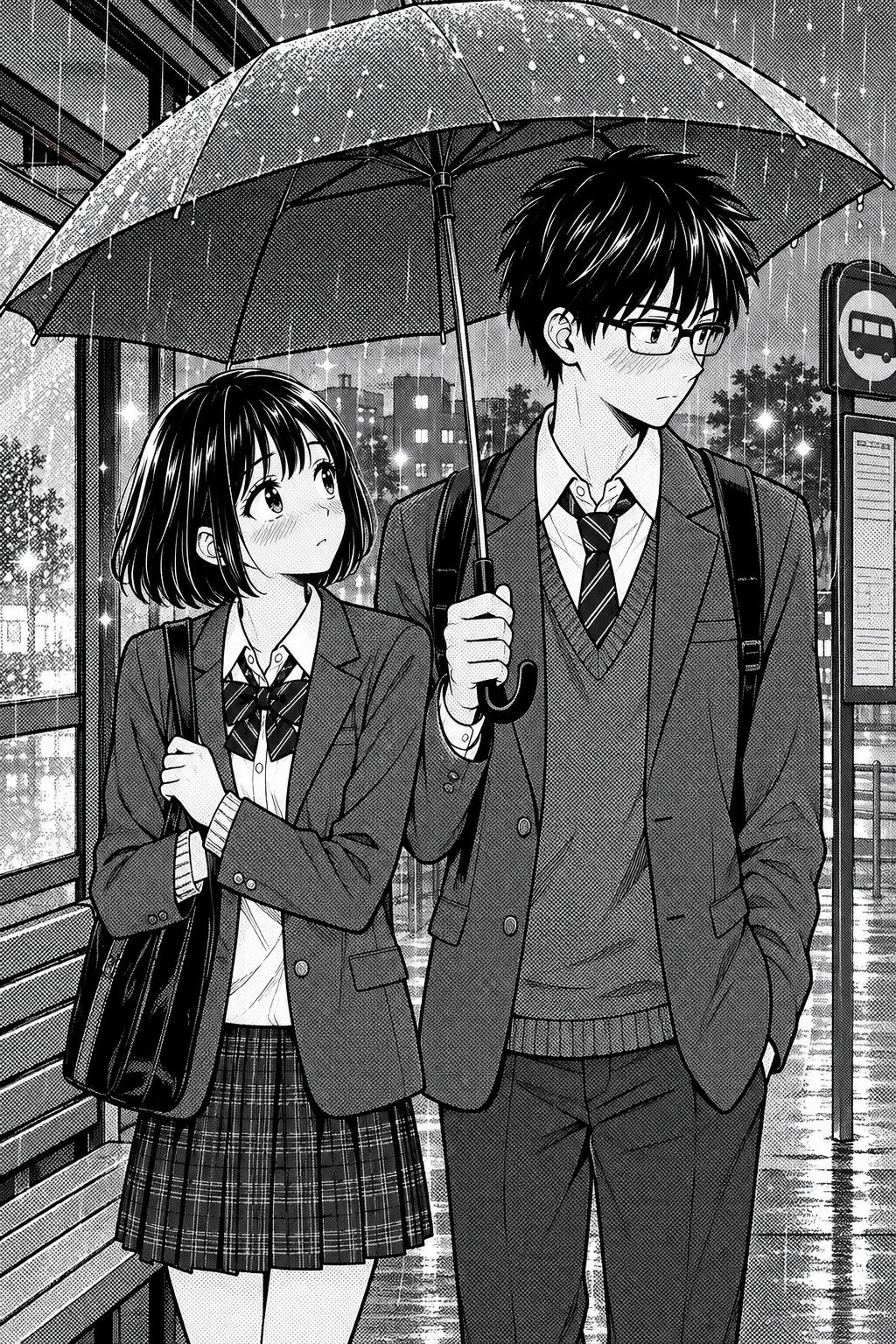
Quiet romance works as well as action.
What it's great for
- Shōnen action: sword fights, sports matches, tournaments, anything with speed lines and impact.
- School life and comedy: classrooms, clubs, and big reaction faces that read instantly in black and white.
- Romance and drama: soft screentone and sparkle effects for the quiet, emotional beats.
- Mystery and horror: deep blacks and hard shadows build tension without a single drop of colour.
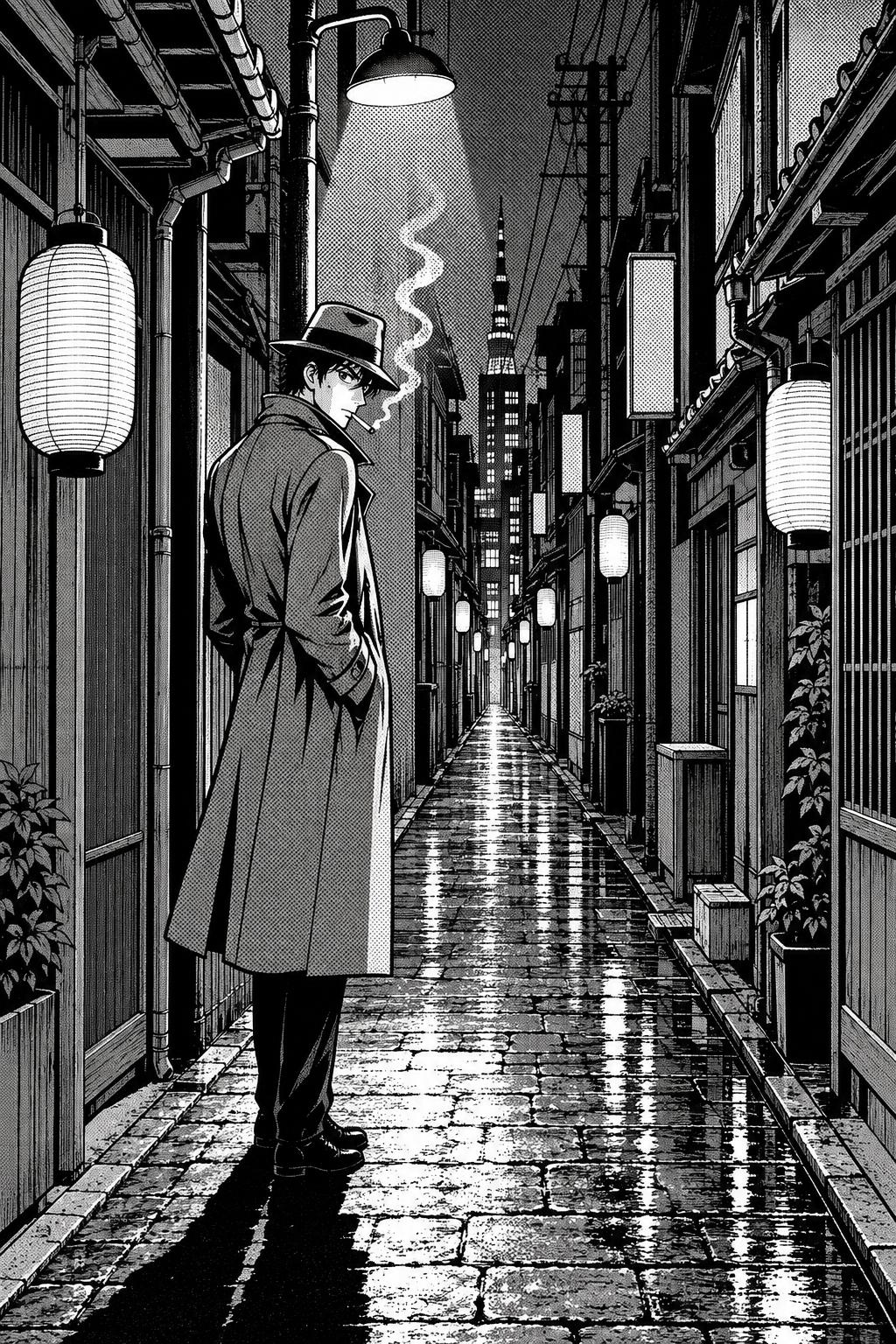
Hard shadows and wet streets for mystery and noir-flavoured manga.
Same characters on every page
A manga chapter is dozens of panels of the same people, so the style runs through the same character pipeline as the rest of YarnSaga. Design a character once, by describing them in your own words or from a photo, and every panel uses that character sheet as its reference: the same face, the same hairstyle, the same uniform. Be specific about the details that matter to you. "A pleated skirt that falls below the knee" is drawn the way you wrote it; "somewhere between mid-thigh and the knee" leaves the generator room to pick the short end. More on that in how to keep your AI comic characters consistent.
How to start a black-and-white manga
The style is live now. Create a new story and pick Manga (Black & White) from the art style list; it's marked NEW. Create your characters, write your scenes, then letter your pages with speech bubbles. If you're lettering manga for the first time, our speech bubble guide covers bubble types and right-to-left reading order. For the full workflow from idea to finished chapter, see the manga maker page.
Want more examples first? Browse the Manga (Black & White) style page or the whole art style library. And if there's a style you'd like us to build next, email me. This one exists because somebody asked.
Open the app and start your manga today.
Create your first story — no drawing skills needed
Characters stay consistent across every panel, automatically.
Request Early Access →More Articles
Explore YarnSaga